If you have ever booted up the indie horror title Tenebris Somnia on Steam and watched the 8-bit world snap into live-action footage, the first question that comes to mind is simple: Tenebris Somnia who do you play as? The answer is Julia, a young woman dropping off an apartment key to her film-maker ex-boyfriend, but the full character roster runs deeper than a single protagonist. This walkthrough covers Julia's role, the live-action supporting cast, the silent pixel NPCs scattered through the apartment, and the studio team behind the curtain.
The Protagonist: Julia and Her Role in the Story
Julia is the player character from the opening scene to the final cutscene, and her perspective anchors the entire eight or sixteen-bit horror experience. She walks through the apartment, picks up key items, solves inventory puzzles, and triggers the FMV (full-motion video) sequences that reveal what the pixel art cannot show on its own. The story is told through her eyes, her dialogue choices, and the emotional baggage of a recent breakup, which is why her performance carries so much weight despite the game's retro visual style.
Who Julia Is Beyond the Pixel Sprite
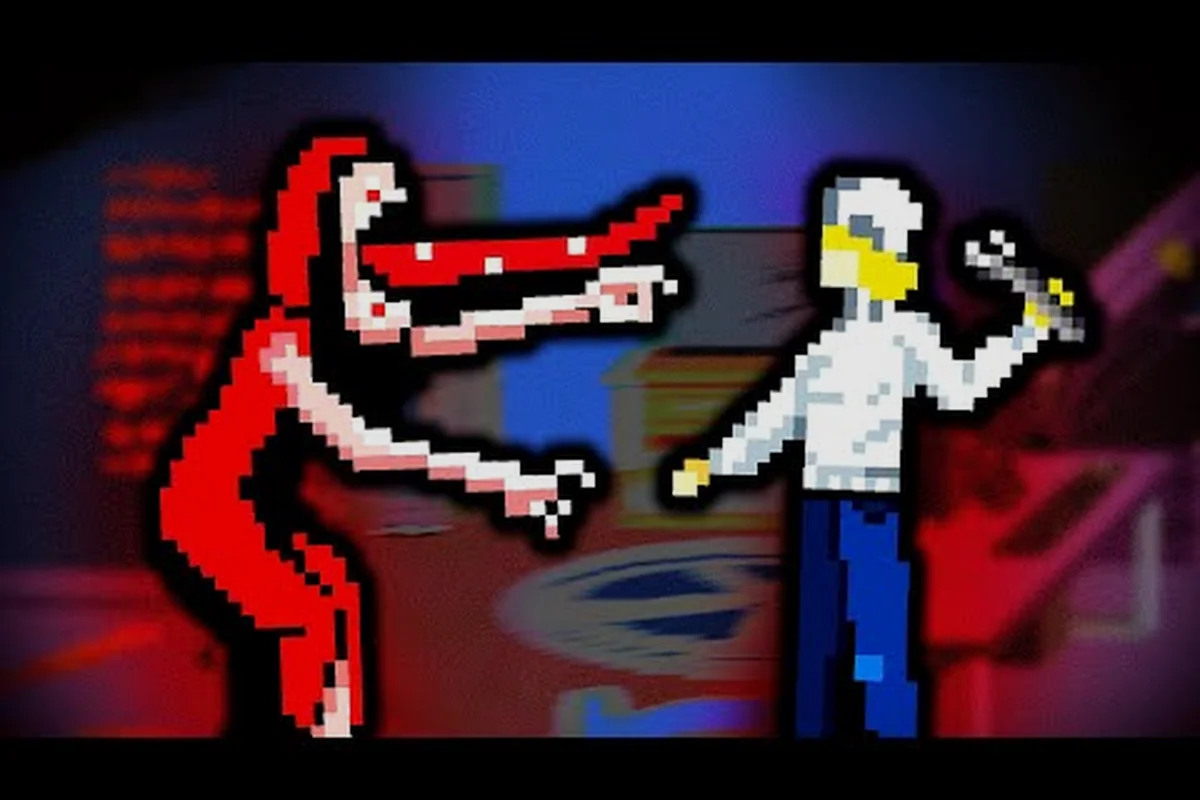
According to the Rock Paper Shotgun preview of Tenebris Somnia, Julia is a young woman visiting her film-maker ex-boyfriend's place to return their old apartment key. She is still working through the breakup, and that grief bleeds into every corner of the rooms she explores. The apartment is full of broken glass, anomalous red gloop, and creepy occult books, all of which she has to navigate in 8-bit form while a live-action version of her reacts in real time on the same screen.
If you managed to print Julia's stats from the Tenebris Somnia character sheet, the resulting dossier would distill her role as both player character and live-action lead into something like the attribute breakdown below — the same fields that matter for any Tenebris Somnia main character wiki entry.
| Attribute | Detail |
|---|---|
| Name | Julia |
| Role | Player character / live-action lead |
| Apparent motivation | Returning the apartment key to her ex |
| Emotional state | Grieving, anxious, increasingly unsettled |
| Visual style | 8/16-bit sprite in gameplay, live-action FMV in cinematics |
| Gameplay function | Walking, inventory management, puzzle solving, light combat |
| Narrative function | Sole POV; the player sees everything through Julia's eyes |
Why Julia Is the Only Playable Character
Tenebris Somnia is a single-protagonist horror adventure in the lineage of Silent Hill and Resident Evil, as the Steam store page confirms. The game never asks you to switch to a second playable character, because the entire emotional core of the story depends on staying inside Julia's head. When the FMV cuts in, you are watching her act out the scene, not a silent observer.
That single-character design is also why Tenebris Somnia Julia quotes land so hard. A line like her trembling "I just wanted to give this back" carries different weight when you, the player, were the one clicking through the apartment to deliver the key. The script leans on that player-character link, and a fuller breakdown of her motivations lives in the Julia character profile.
The Live-Action Supporting Cast Around Julia
Although Julia is the only playable character, she is far from the only person on screen. Tenebris Somnia blends its pixel world with professionally shot live-action FMV sequences filmed by an award-winning crew from Argentina, which is why the supporting cast feels cinematic rather than cheaply acted. The live-action players give the story its emotional gravity whenever the 8-bit world hands the camera over to real footage.
The Ex-Boyfriend: The Film-Maker You Never Quite Meet
Julia's ex-boyfriend is a film-maker, and that detail matters more than it first looks. He is the reason the apartment is full of occult books, red gloop, and the kind of decor you only build when you have been researching something deeply strange. The player never gets a clean introduction to him, but his presence is everywhere: in the books on the shelves, in the film equipment lying around, and in the FMV flashbacks that play out like a memory Julia cannot shake.
The ex-boyfriend is not technically a playable character, but he is the gravitational center of the plot. Without him, there is no key to return, no apartment to wander, and no reason for Julia to be there in the first place. His role is closer to a Silent Hill-style absent antagonist than a typical NPC, and the game treats his absence as louder than his appearances.
The Award-Winning Film Crew Behind the FMV
The live-action sequences are not improvised, and they are not low-budget. Tenebris Somnia's cinematics were produced by a professional award-winning film crew from Argentina, which is one of the most consistent talking points in early community coverage. That crew is not a character in the game, but they are the reason the live-action half of the title works at all, and they are part of the broader Tenebris Somnia characters wiki conversation that fans build around the title.
Here is how the live-action supporting cast breaks down at a glance. The table maps each real-world film crew member to a practical role inside the FMV pipeline — for example, the director/cinematographer controls the framing of every nightmare sequence Julia walks into, while the practical-effects team is what makes the diegetic horror feel grounded in the bedroom, the hallway, and the dark-room environments rather than reading as digital CG. Because the live-action footage and the 2D gameplay share the same controlled vision, knowing who sits behind the camera is part of answering who do you play as in Tenebris Somnia — you are playing through Julia, but the film crew is the unseen co-author shaping her experience.
| Live-Action Role | Player/Crew | In-Game Function |
|---|---|---|
| Julia | Lead actress (live-action) | Player avatar, POV character, dialogue |
| Ex-boyfriend | Supporting actor | Off-screen presence, FMV flashbacks |
| Director/cinematographer | Real-world film crew | Shapes the FMV tone and pacing |
| Practical-effects team | Real-world film crew | Creates the live-action horror moments |
| Voice cast | Live-action actors | Carry Julia's emotional performance |
For a deeper look at the casting behind Julia's performance, the Tenebris Somnia Julia actress breakdown covers the live-action audition process, the screen chemistry tested between the lead actress and the supporting ex-boyfriend actor, and how those casting decisions shaped the FMV nightmare sequences you play through — the practical reason the bedroom and hallway scenes feel as grounded as the gameplay half.
The Pixel-Side NPCs and Creatures
Step out of the FMV and back into the 8-bit half of the screen, and the cast changes completely. There is no dialogue in pixel-art form, only sprite movement, item placement, and the creatures that try to stop you. The Tenebris Somnia NPC list is small on purpose: this is a tightly designed horror adventure, not an open-world RPG, so every non-Julia sprite in the apartment has a specific reason for being there.
Friendly and Neutral Sprites in the Apartment
Most of the Tenebris Somnia supporting characters on the pixel side are silent background sprites: a stray cat here, a creaking door there, a phone that rings once and never again. None of them talk, none of them offer quests, and none of them break the fourth wall. They exist to make the apartment feel lived-in, which is what makes the later horror beats so much more effective.
These neutral sprites in Tenebris Somnia loosely split into background NPCs that populate the apartment hallways, ambient animals like the recurring stray cat and occasional rats, inanimate phone and TV props scattered between the living room and bedroom, and small animated objects such as the ticking clock and a persistently dripping tap, all of which fire short audio cues or FMV-style hints without ever delivering dialogue or breaking the fourth wall before the horror escalates.
| Sprite Type | Where You See It | Why It Matters |
|---|---|---|
| Background NPCs | Apartment hallways | Make the world feel populated before things go wrong |
| Animals | Cat, occasional rats | Subtle environmental storytelling |
| Phone/TV props | Living room, bedroom | Trigger short audio cues and FMV hints |
| Animated objects | Clock, dripping tap | Build tension without dialogue |
Enemies: The Creatures Julia Has to Survive
The enemies in Tenebris Somnia are not Tenebris Somnia supporting characters in any narrative sense, but they are the closest thing the pixel world has to NPCs you actually interact with. The official store description frames the loop as survival through puzzle-solving and creature fights, which means combat is light but real.
A practical enemy breakdown distinguishes each archetype by its combat window, room placement, and the Julia toolkit resources it pressures you to spend — melee crawlers drain stamina through forced dodges in tight apartment rooms, red gloop anomalies bypass combat entirely as environmental hazards that punish exploration routes, occult summons gate progression behind puzzle solutions before forcing a direct fight in the late-game library, and the final horror layers pattern-based inputs over a scripted FMV-puzzle sequence. Reading the table below as a difficulty curve rather than a flat list helps you see when to conserve Julia's healing items versus when to spend them, since earlier enemies reward positioning while later ones test reaction time and resource management simultaneously.
| Enemy Archetype | First Encounter | Combat Style |
|---|---|---|
| Standard crawler | Early apartment rooms | Slow, melee, easy to dodge |
| Red gloop anomaly | Mid-game rooms | Environmental hazard, avoid contact |
| Occult summon | Late-game library | Puzzle-gated, then direct fight |
| Final horror | Climactic FMV-puzzle sequence | Pattern-based, scripted |
If you want a more strategic look at the harder fights, the best characters and enemy guide covers how Julia's limited toolkit — single melee swing, dodge roll, and limited healing — holds up against the more relentless patterns, particularly the occult summon that gates progression behind solving the right puzzle in the late-game library and the final horror that layers pattern-based inputs over a scripted FMV-puzzle sequence.
How the Cast Fits Into the Puzzles and Progression
Julia's character is not just a moving sprite; she is a puzzle-solving engine. Most of the Tenebris Somnia characters wiki entries that players maintain on community pages frame Julia as the only character with an inventory, a sanity meter, and access to the apartment's interactive objects. Every other character, living or dead, exists to give her something to react to.
Character-Driven Puzzle Flow
The puzzle loop in Tenebris Somnia follows a reliable rhythm: explore a new room as Julia, find a strange object, combine it with another item, and then watch a live-action sequence that explains what just happened narratively. That dual-style structure is the Tenebris Somnia who do you play as answer in mechanical form: you play the quiet pixel half, and Julia plays the loud FMV half, and both halves are you.
| Puzzle Stage | Julia's Action | What Changes |
|---|---|---|
| Exploration | Walk through apartment rooms | New pixel rooms unlock |
| Inventory | Combine two items | FMV trigger prepares |
| FMV payoff | Watch live-action cutscene | Story advances, new doors open |
| Survival | Fight or flee a creature | Health and resources adjust |
Character Beats That Reshape the Apartment
Certain Tenebris Somnia Julia quotes do not just deliver dialogue, they literally change the layout of the apartment. A line of dialogue might unlock a door, a flashback might reveal a hidden key, and an emotional breakdown might force the player into a quick-time event. The character's inner life and the apartment's geometry are stitched together, which is why the game feels so personal even though the sprites are only a few pixels tall.
The character art team's work on the broader roster, including Julia's pixel design and the supporting sprite work, is documented in the Tenebris Somnia character art book entry, which is the cleanest community reference for visual design notes.
Developer, Cast, and Studio Context
The Tenebris Somnia characters wiki that fans build online does not stop at Julia and the ex-boyfriend; it also includes the people who made the game. Because Tenebris Somnia is a small indie production with a real film crew attached, the line between in-game character and real-world creator gets blurry fast, and that context helps players understand why the game looks the way it does.
Key Real-World Names Attached to the Game
The development team and the live-action crew overlap more than they would on a typical indie project. The character explanations community page lists names like Andrés Borghi and Tobias Rusjan alongside the studio name Saibot Studios, and the Argentine film crew is the same team that shoots the FMV sequences players see in-game. That overlap is intentional, and it is part of why the cast credits feel so personal.
| Real-World Name | Role | Connection to the Game |
|---|---|---|
| Andrés Borghi | Director / creative lead | Shapes both pixel and FMV direction |
| Tobias Rusjan | Co-developer | Co-builds the retro gameplay systems |
| Saibot Studios | Development studio | Overall production |
| Argentine film crew | Live-action production | Shoots the FMV sequences |
A full rundown of how the developers shaped the cast sits in the Tenebris Somnia characters explained guide, which is the best starting point if you want to learn the names behind the credits.
Why the Cast Credits Matter for Players
Knowing who made the game does not change the puzzles, but it does change how the story lands. When you see a real actress performing Julia's fear, knowing the crew's pedigree adds weight to the moment, and when the pixel art shifts into FMV, knowing the same studio made both halves explains why the transition feels intentional rather than gimmicky. The characters wiki pages on community sites lean on this context heavily, and the official New Blood Interactive page confirms the multi-platform release plans that make the cast accessible to a wider audience.
Frequently Asked Questions
Who do you play as in Tenebris Somnia?
You play as Julia, the young woman returning the apartment key to her film-maker ex-boyfriend. She is the only playable character across both the 8-bit exploration sections and the live-action FMV cinematics, and every puzzle, item, and combat encounter runs through her perspective.
Is Julia the only character in Tenebris Somnia?
Julia is the only playable character, but the game features live-action supporting cast members, including her ex-boyfriend and other figures who appear in FMV flashbacks, plus silent pixel NPCs and enemies in the apartment. The broader Tenebris Somnia characters wiki also credits the real-world Argentine film crew and the Saibot Studios development team.
Are there NPCs you can talk to in the pixel art sections?
There are no traditional dialogue-heavy NPCs in the pixel sections, which is consistent with the game's survival horror design. The supporting sprites are mostly background characters, animals, and interactive props that build atmosphere rather than deliver quests, and the story beats come from FMV sequences and Julia's own dialogue.
Who voices or plays Julia in the live-action scenes?
Julia is performed by a live-action actress on the Argentine film crew that produced the FMV sequences, and her real-world performance carries the emotional weight of the story. Community pages and the Tenebris Somnia Julia actress breakdown cover the casting in more detail.
Where can I find the full cast list and credits?
The cleanest community-sourced reference is the Tenebris Somnia characters wiki, which combines in-game sprite roles, live-action cast names, and the development credits from Saibot Studios. The Steam news page and the official New Blood Interactive page also confirm platform and release context.