
The Tenebris Somnia Julia character anchors the entire 8-bit horror adventure, and her real-world breakup is the emotional engine that drags players into the live-action nightmare sequences. She is the protagonist you control across every retro-styled room, puzzle, and creature encounter, while her film-maker ex's apartment becomes the liminal space where the game's two visual styles collide. Understanding who Julia is, what motivates her, and how she functions inside both the pixel world and the FMV cutscenes is essential for any player who wants to decode the story's recurring occult imagery and survive the escalating threat.
Who Is Julia in Tenebris Somnia?
Julia is the player-controlled protagonist of Tenebris Somnia, a young woman who visits her film-maker ex-boyfriend's apartment to return their old apartment key. The visit is supposed to be quick and final, a symbolic closing of a relationship she has not fully processed, but the apartment is in disrepair, the hallway smells of something rotting, and every surface seems to carry an omen. According to the Tenebris Somnia Steam store page, Julia's emotional state is the entry point for a survival horror adventure inspired by Silent Hill and Resident Evil, reframed through a retro 2D lens.
| Attribute | Value |
|---|---|
| Protagonist name | Julia |
| Role | Player-controlled protagonist |
| Apparent age | Young woman (exact age not disclosed in store page) |
| Primary motivation | Return old apartment key to film-maker ex-boyfriend |
| Emotional state at start | Unprocessed break-up, lingering attachment |
| Stated inspirations | Silent Hill, Resident Evil |
| Visual rendering | Retro 2D / 8-bit aesthetic (adventure-game segments) |
| Real-world rendering | Live-action FMV with real actors and practical effects |
| Genre framing | Survival horror adventure |
| Symbolic item carried | Old apartment key (relationship-closure object) |
Julia's Role as the Sole Playable Character
From the moment the title screen fades, you are Julia, and the game never hands control to another avatar. She navigates the 8-bit overworld, manages the inventory, solves object combination puzzles, and fights off horrible creatures with whatever improvised weapon the apartment yields. Her design philosophy echoes classic survival horror protagonists: she is not a soldier, she is a civilian out of her depth, and that vulnerability is what makes the 8-bit pixel art feel genuinely threatening rather than nostalgic.
Why Julia Matters to the Story
Without Julia's unresolved grief, Tenebris Somnia has no narrative tension. The monsters, the occult books, the red gloop dripping from the walls, and the live-action sequences all read as the symbolic projection of a young woman who has not let go. Julia's significance to the plot is therefore structural as well as emotional: she is both the witness and the cause of the horror, and the game repeatedly forces her to confront what she has been avoiding in her waking life.
Julia's Backstory and Her Film-Maker Ex
Julia's backstory is deliberately sparse, which is part of what makes the Tenebris Somnia Julia character feel so grounded. The press preview from Rock Paper Shotgun frames the setup plainly: she is having a hard time getting over the breakup, and her ex is a film-maker whose home is filled with broken glass, anomalous red gloop, and creepy occult books. That minimal context is the entire emotional scaffolding, and the rest of the game lets the player's imagination fill in the gaps.
The Apartment Key as a Narrative Catalyst
The catalyst for everything is mundane: an old apartment key that Julia still carries long after the relationship has ended. Returning it is the kind of errand that feels small in real life and enormous in a horror game, because it forces Julia to physically re-enter the space where she was happy, and where she was hurt. The key is also a recurring inventory item that resurfaces at critical story beats, which means the player is constantly reminded that Julia's mission is not really about a key at all, it is about closure.
The Film-Maker Ex as an Off-Screen Presence
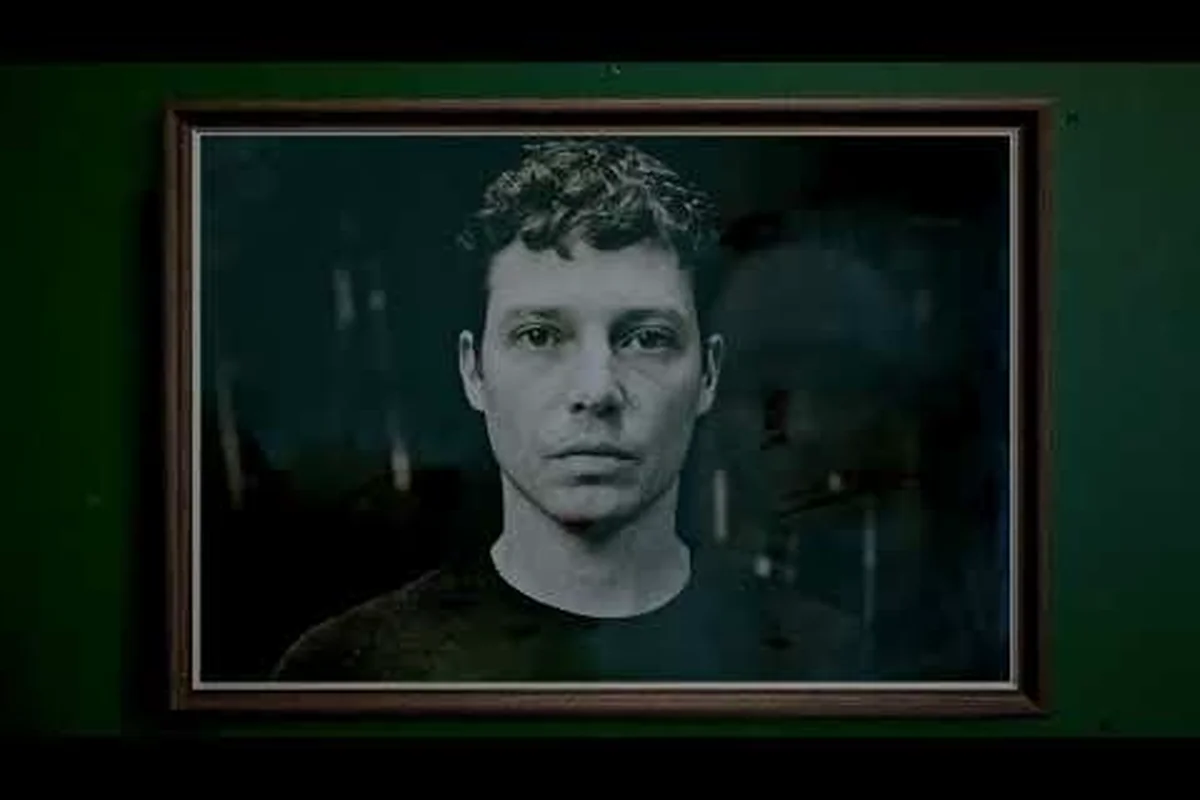
The ex-boyfriend himself is never named and is only seen in fragments, primarily through the live-action FMV sequences that interrupt the 8-bit gameplay. As a film-maker, he becomes the in-universe justification for the high-production cutscenes: the same camera rigs, lighting setups, and practical effects that would exist on an indie film set. His absence from the pixel world makes him a more imposing figure than any rendered sprite could be, and his presence in the live-action footage makes every cutscene feel like evidence of something Julia is not supposed to see.
Why the Backstory Is Kept Vague
Tenebris Somnia intentionally avoids giving Julia a full biography, hometown, or family tree, because the game's horror is rooted in emotional projection rather than plot mechanics. The vagueness lets players map their own breakup experiences onto Julia's journey, which is a deliberate design choice shared with classic psychological horror. The less the game tells you about Julia, the more the 8-bit apartment starts to feel like a place you have actually been.
The Tenebris Somnia Character List and Julia's Place in It
Julia is the center of a deliberately small cast, and understanding the Tenebris Somnia character list helps frame how unusual her role is. Most survival horror games surround the protagonist with a parade of supporting characters, journal entries, and voiced NPCs, but Tenebris Somnia strips the supporting cast down to almost nothing. That scarcity is itself a narrative device, because every non-Julia figure who appears is meant to feel intrusive, wrong, or impossible.
Core Roster of Named Characters
| Character | Role in Story | Visual Style | Player Interaction |
|---|---|---|---|
| Julia | Protagonist, key-deliverer, survivor | 8-bit pixel sprite | Fully controlled |
| Ex-boyfriend (unnamed) | Off-screen presence, FMV anchor | Live-action actor | Indirect, via cutscenes |
| Occult book author(s) | Implied, via in-game text | Pixel-rendered pages | Read-only |
| Apartment creatures | Hostile entities, nightmare fuel | 8-bit and live-action hybrid | Combat encounters |
Julia vs the Ex-Boyfriend as Dual Anchors
The dynamic between Julia and her ex is the closest thing Tenebris Somnia has to a two-character story, but the two never share a frame. Julia exists entirely in the 8-bit world, moving through rooms one tile at a time, while the ex exists entirely in the live-action world, captured by a professional film crew. The player's job is to mentally bridge those two realities, and the game never offers a satisfying reconciliation on purpose, because the horror depends on the gap.
Supporting and Background Figures
Beyond the core duo, Tenebris Somnia populates its world with minor figures: silhouettes in photographs, distorted voices on radios, and half-glimpsed faces in the FMV footage. None of these are full characters in the RPG sense, but they reinforce the feeling that Julia is being watched, and that the apartment contains more history than she ever knew. For a broader overview of who populates the world, the Tenebris Somnia character guide breaks down the full cast across both visual styles.
How Julia Functions Across the 8-Bit and Live-Action Styles
Tenebris Somnia's signature hook is the collision of two visual languages within a single frame, and the Tenebris Somnia Julia character is the only figure who truly spans both. The 8-bit layer is where the gameplay happens, while the live-action layer is where the emotional truth is delivered, and Julia's body, voice, and silhouette must work convincingly in both registers.
Gameplay in the 8-Bit Layer
In the pixel world, Julia is rendered as a small sprite with limited animation frames, which keeps her readable across dark hallways and blood-red rooms. The 8-bit aesthetic is intentionally described by the developer as "unpleasantly bright," because the cheerful color palette is constantly undermined by what Julia actually encounters: broken glass, organic stains, and creatures that should not exist in a space this small. The pixel layer is where Julia acts, but never where she processes what is happening to her.
Emotional Stakes in the Live-Action Layer
When the camera cuts to live action, Julia is played by a real actor, with practical effects and professional lighting that mirror the ex-boyfriend's film-maker profession. These sequences are not skippable, and they deliver the emotional and psychological content that the 8-bit gameplay can only imply. Julia's body language, breathing, and hesitation in the FMV footage carry far more weight than her pixel sprite ever could, which is why the live-action moments feel like violations of the player's protective retro distance.
The Mechanic of Style Switching
| Layer | Trigger | Julia's State | Player Input |
|---|---|---|---|
| 8-bit exploration | Default after load | Walking, examining, inventory | Full control |
| Live-action sequence | Story flag or key item | Frozen, cutscene-driven | None |
| 8-bit puzzle | Return from cutscene | Resumed at same tile | Full control |
| Boss-style encounter | Late-game flag | Combat stance | Limited combat input |
The shift between styles is not a cosmetic toggle, it is a narrative beat. Each transition reminds the player that Julia is the only constant between two incompatible realities, and that the apartment is the seam where those realities are stitched together.
Julia's Nightmare Role and the Question of What Is Real
The "nightmare" in Tenebris Somnia is never presented as a straightforward dream sequence, and the official tagline "What if they aren't just nightmares?" frames Julia's experiences as ambiguous by design. The Tenebris Somnia Julia character exists in a state of suspended disbelief, performing rational actions like picking up a key or opening a door, while the world around her accumulates evidence that rational explanations are insufficient.
Occult Books and Red Gloop as Emotional Metaphor
The creepy occult books that litter the apartment are not props, they are the ex-boyfriend's research materials, and they read as a record of someone who was already chasing the impossible before Julia ever arrived. The red gloop, meanwhile, is never given a scientific explanation, and it functions as the game's primary visual shorthand for trauma leaking into physical space. Julia's role in these moments is to react, not to investigate, and her restraint is what keeps the player from receiving answers too early.
The Ex-Boyfriend's FMV Footage as Unreliable Memory
The live-action sequences are presented as if they are the ex-boyfriend's own film work, which means every shot of Julia in FMV is technically a memory, a reconstruction, or a fabrication. This unreliable framing turns Julia into both subject and audience of her own story, and it forces players to question whether the 8-bit exploration is the "real" layer or whether the live-action footage is. The game refuses to resolve that question, and Julia's nightmare role is to keep both possibilities alive without ever collapsing into one.
Why the Nightmare Role Resonates with Players
Community reactions to Julia consistently emphasize how ordinary she feels, and that ordinariness is the engine of the horror. She is not a chosen one, she is not a trained investigator, and she has no special insight into the occult. Her nightmare role works precisely because she is the wrong person to be in this apartment, which is exactly why the game puts her there. For players who want to compare Julia's screen time to other figures in the cast, the Tenebris Somnia character tier list sorts the roster by narrative weight and gameplay impact.
Frequently Asked Questions
Who is Julia in Tenebris Somnia?
Julia is the player-controlled protagonist of Tenebris Somnia, a young woman who visits her film-maker ex-boyfriend's apartment to return their old apartment key. She is having a hard time getting over the breakup, and her emotional state becomes the entry point for a survival horror adventure that blends 8-bit gameplay with live-action FMV sequences.
What is Julia's backstory in Tenebris Somnia?
Julia's backstory is intentionally minimal: she is recently out of a relationship with a film-maker, still carrying the apartment key, and struggling to move on. The game uses that emotional setup as the foundation for the entire nightmare, and her backstory is revealed gradually through in-game objects rather than exposition dumps.
Who is Julia's ex-boyfriend in Tenebris Somnia?
The ex-boyfriend is an unnamed film-maker whose apartment Julia visits at the start of the game. He never appears as an 8-bit sprite and is only seen in the live-action FMV sequences, which doubles as in-universe justification for the high-production footage shot by a professional Argentine film crew.
How does Julia fit into the Tenebris Somnia character list?
Julia is the sole playable character in the Tenebris Somnia character list, and the only figure who exists in both the 8-bit and live-action visual styles. Every other named or implied character is either a background presence or a hostile creature, which keeps the narrative focus tightly on her perspective.
Is Julia a horror protagonist or a victim?
Julia functions as both. She is the active protagonist who solves puzzles, manages inventory, and survives creature encounters, but she is also emotionally vulnerable and repeatedly placed in situations she cannot rationally explain. The game leans into that duality by making her nightmare role feel like something she is enduring rather than something she is mastering.