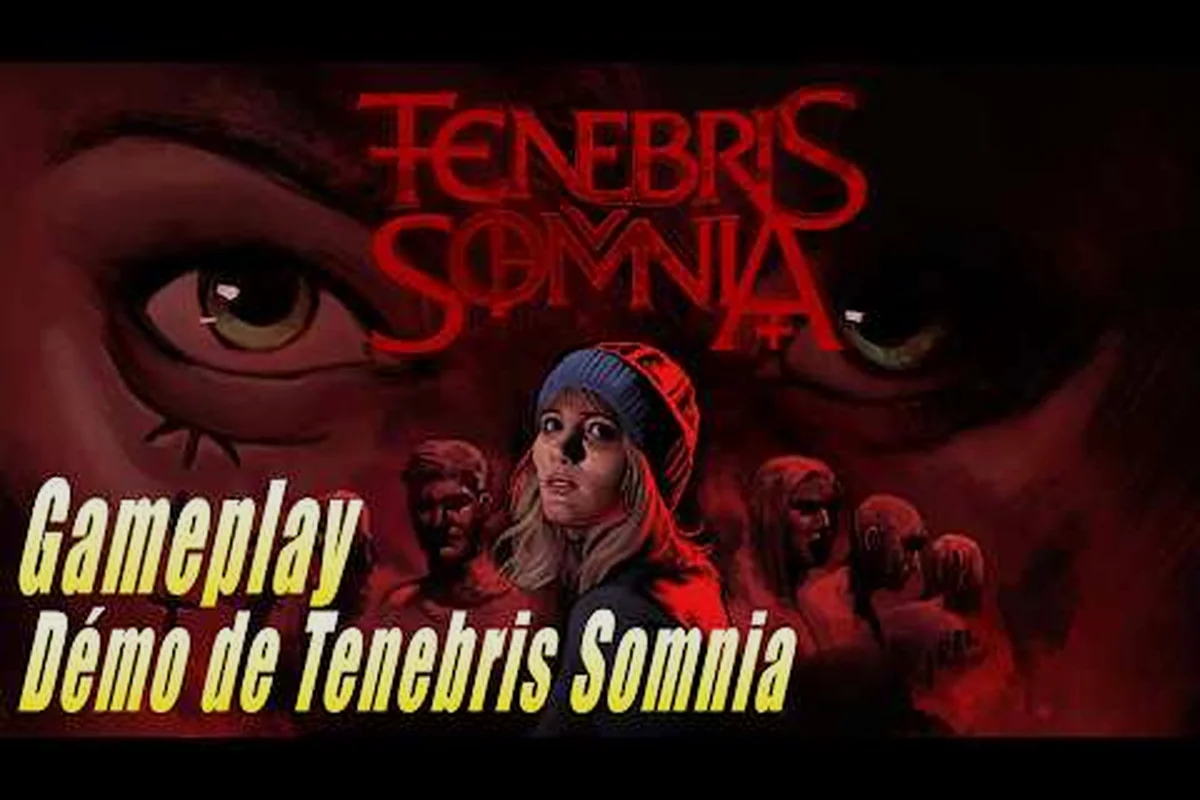
Booting Tenebris Somnia for the first time can feel jarring: a retro 8-bit survival horror world on the left, a live-action cinematic feed on the right, and a controls screen that scrolls longer than your average Resident Evil inventory. This Tenebris Somnia steam guide walks you through the practical setup that most first-time players miss, from binding a clean keyboard layout to wiring a gamepad, picking the right Steam launch flags, and prepping the GOG demo so the game boots without a hitch.
Before you tweak a single option, decide whether you'll bind exploration to keyboard, combat hotkeys to mouse buttons, and puzzle prompts to a gamepad trigger — because Tenebris Somnia's mixed 8-bit plus live-action scene stack demands sub-second swaps between inventory swaps, the CRT-style reticle, and timed QTE prompts. The in-game controls screen lists roughly 40 bindings by default, but rebinding even six of them to a stable layout (WASD reserved for movement, F for interact, R for reload) cuts input lag during the dual-screen chase sequences where a missed tap ends the run.
Tenebris Somnia Controls Guide: Keyboard and Mouse Baseline
The default Tenebris Somnia controls map comfortably onto a WASD layout, and the developers clearly tuned the key bindings for desktop play first. A typical binding sheet breaks down into movement, interaction, combat, and menu layers, with a few utility toggles reserved for the live-action cinematics that interrupt the action.
| Action | Default Key | Notes |
|---|---|---|
| Move | W / A / S / D | 4-directional, no diagonal run |
| Interact / Examine | E | Highlights interactable objects |
| Attack | Left Mouse Button | Mapped to equipped weapon |
| Block / Defend | Right Mouse Button | Reduces incoming damage by ~50% |
| Inventory | I or Tab | Toggle item wheel |
| Pause Menu | Esc | Brings up settings and save slot |
| Live-Action Skip | Space | Skips FMV sequences once watched |
| Quick-Save | F5 | Stores to active slot, no confirm |
If you have a ten-keyless board, the F5 quick-save binding becomes your best friend. According to community testing on the Steam discussion board, the default layout assumes a 104-key ANSI board, so users on 60% keyboards need to remap quick-save and quick-load to reachable positions. Players using the tenebris somnia demo walkthrough typically bind quick-load to a mouse side button, since the demo is unforgiving and dying in the apartment means restarting from the hallway.
Mouse sensitivity is worth dialing in early. The pixel-art aesthetic can mask subtle cursor drift, and during puzzle segments the cursor changes shape when hovering over interactable hotspots. Community testing suggests a DPI range of 800-1600 with in-game sensitivity between 40% and 60% gives the cleanest hotspot detection without over-shooting the inventory wheel.
Why Keyboard Feels Right for the Puzzle Segments
Tenebris Somnia leans heavily on object combination, similar to classic Resident Evil or Silent Hill lockers. Combining items requires precise cursor movement, and a mouse gives you sub-pixel accuracy that no thumbstick can match. Keyboard players also get an edge in the live-action menu overlay, where the developers added a pop-up that asks whether you want to "engage" or "observe" the FMV. According to players, the input prompt appears for roughly 3 seconds, and mouse hover speed decides whether you accidentally engage with a jump scare.
The game supports up to 10 active save slots and rotates auto-saves into a dedicated "Recent" slot. Even on keyboard, you can manually trigger an auto-save with the pause menu, which is the recommended way to checkpoint before a boss door. Saving scumming is not punished, so reloading after a bad encounter is a legitimate strategy during your first run.
Tenebris Somnia Gamepad Controls: Xbox, PlayStation, and Steam Input
Tenebris Somnia ships with native gamepad support for Xbox Series controllers, DualSense, and the DualShock 4. Steam Input is also exposed, which means any DirectInput or generic gamepad will register once you set it up through Big Picture Mode. The native layout mirrors most action-adventure pads, but a few quirks are worth flagging before you start.
| Action | Xbox Layout | PlayStation Layout | Notes |
|---|---|---|---|
| Move | Left Stick | Left Stick | No inverted-Y option, neutral only |
| Interact | A | Cross | Triggers examine prompt |
| Attack | X | Square | Uses equipped weapon |
| Block | RT (Hold) | R2 (Hold) | Reduces damage by ~50% |
| Inventory | Y | Triangle | Opens item wheel |
| Pause | Start | Options | Opens settings and saves |
| FMV Skip | B | Circle | Watches and skips |
| Quick-Save | D-Pad Up | D-Pad Up | Re-mappable via Steam Input |
The most important nuance is the block input. On keyboard, blocking is a right-click hold, but on gamepad it's mapped to the trigger. Triggers fatigue the hand much faster than a mouse button, so players who plan a long session often remap block to a shoulder button. According to players on the official Discord, the LB / L1 binding is the most popular swap because it leaves the index finger free for face-button attacks.
Steam Input lets you take this further. You can layer a "soft press" binding on the left trigger that activates a quick-step dodge while a hard press blocks, which is closer to a Souls-like combat feel. However, the game does not expose a native dodge button, so this is purely a Steam Input macro and may register as two actions during a frame-perfect dodge.
Steam Input Layers Worth Configuring
The default layer maps cleanly, but creating a secondary "Puzzle Layer" can save real time. Bind the right stick to a mouse emulation layer that activates only when you hold the left stick click. The moment you engage the puzzle layer, the right stick controls the cursor and the right trigger clicks. This is a huge quality-of-life improvement during combination screens because you no longer need to keep one finger hovering over a face button.
For handheld players running the game on a Steam Deck, the community reports a near-native experience once you switch the controller profile from "Gamepad with Mouse Trackpad" to the dedicated "Tenebris Somnia" community config. Performance-related settings are covered separately in the tenebris somnia horror game guide, which breaks down resolution, TDP, and frame pacing specifically for the Deck.
Tenebris Somnia Demo Guide: Launch Options and First Boot
The Tenebris Somnia demo on Steam and GOG is a separate executable, and it expects a slightly different launch path than the full game. Knowing which flags to set before the first boot will save you from a black screen, an audio stutter, or worse, a crash during the live-action intro cinematic.
| Launch Option | Effect | Use Case |
|---|---|---|
-windowed | Forces windowed mode | Multi-monitor users |
-fullscreen | Forces exclusive fullscreen | Single-monitor CRT users |
-w 1920 -h 1080 | Sets internal resolution | 1440p monitors avoiding blurry upscale |
-novid | Skips intro logos | Quick restart loops |
-forceglcore | Forces OpenGL core profile | Legacy driver crash fix |
-nolog | Disables verbose log spam | Performance-sensitive debugging |
-nomousegrab | Frees the mouse on Alt-Tab | Streamers with chat overlay |
These flags drop into Steam under Properties → General → Launch Options as a space-separated string. According to the Tenebris Somnia on Steam store page, the demo was updated and expanded before Steam Next Fest 2025 with new scenarios, enemies, items, and weapons, so the launch flags have remained stable across demo revisions.
For the GOG version, the same flags work, but you set them in the Galaxy launcher's Settings → Game Features → Advanced → Command Line Arguments field. If you're running the GOG build outside Galaxy through a standalone executable, you can append the flags directly inside a shortcut target, which is the only path that respects the -forceglcore flag on older Intel iGPUs.
First-Boot Checklist
Before launching the Tenebris Somnia demo for the first time, run through this short list of pre-boot checks. Skipping any of these steps is the most common cause of "the game won't start" threads on the community forum, because the live-action FMV layer, the 8-bit world layer, and the Steam overlay all compete for the same GPU and audio resources during initialization — a mismatch there can prevent the executable from reaching the title screen at all.
-
Verify game files in Steam or GOG Galaxy. A single missing FMV file causes a silent crash on the title screen.
-
Set the launch options from the table above. Even
-w 1920 -h 1080alone fixes a majority of letterboxing complaints. -
Disable any overlay that injects hooks (RTSS, MSI Afterburner, Discord overlay on certain drivers). The live-action feed can stutter when an overlay is capturing the FMV stream.
-
Pick your input method before the first scene loads. The game remembers your last input and uses it to position cursor prompts in the live-action menus.
-
Set the audio device in the system tray first, not inside the game. The in-game audio selector sometimes defaults to a disabled output.
After completing the checklist, the demo boots into a black screen, the 8-bit world fades in, and the live-action window opens in the upper-right corner. This is the intended presentation, and you should not toggle either layer off unless the FPS drops below 30.
Tenebris Somnia Keyboard Controls: Rebinding for Speedrunners and Accessibility
While the default layout works for most players, two specific use cases call for custom rebinds: speedrunners chasing the Any% category, and accessibility players who need larger input targets or hold-to-toggle behavior. The rebind menu lives under Settings → Controls → Custom and persists per profile.
For speedrunners, the critical bindings are quick-save, quick-load, and skip-cinematic. The default quick-save is F5 and quick-load is F9, both of which are far from the movement cluster. A common rebind moves quick-save to F1 and quick-load to F3, freeing the right hand to stay on the mouse during combat. The skip-cinematic binding on Space is fine, but rebinding it to a mouse side button lets you skip FMVs without breaking your attack rhythm.
For accessibility, the game exposes three toggles worth knowing. Hold-to-Confirm replaces the 3-second engage prompt in FMV menus with a hold-and-release interaction, which gives players with slower reaction times more room to read the on-screen question. Toggle Aim swaps the right-mouse-button hold for a click-to-toggle behavior, similar to a lock-on. Reduce Motion in the FMV layer dampens the camera shake during jump scares without cutting the live-action footage, an option that the developers specifically added after community feedback during the Tenebris Somnia demo release update window.
The full list of rebindable inputs is below, and it captures every action the engine exposes to the Settings → Controls → Custom menu in Tenebris Somnia. Anything not on this list — including debug console toggles, debug-fly mode, and the developer-only screenshot hotkey — is hard-coded in input.cfg and cannot be remapped through the in-game menu, though Steam Input can intercept and override most of them at the overlay layer. Players using a community Steam Input profile for the gamepad layer have confirmed that even the FMV engage prompt and the Reduce Motion camera dampening can be routed through gyro-to-mouse bindings, effectively extending the rebindable surface beyond what the native menu offers for this tenebris somnia controls guide workflow.
| Input | Default | Rebind Recommended For |
|---|---|---|
| Quick-Save | F5 | F1 (speedrun) |
| Quick-Load | F9 | F3 (speedrun) |
| Skip Cinematic | Space | Mouse X1 (combat flow) |
| Inventory | I | Mouse X2 (one-handed) |
| Engage FMV | E (Tap) | E (Hold) for accessibility |
| Map | M | Left Alt + M (avoid mis-press) |
| Journal | J | Caps Lock (rare use) |
These rebinds persist per Steam Cloud profile, so once you set them on one machine, they sync to any other machine where you sign in. The GOG version has its own cloud profile, so you'll need to mirror the rebinds manually if you play across launchers.
A Note on Steam Cloud and Cross-Save
Tenebris Somnia does not support cross-save between Steam and GOG. The two launchers use different cloud namespaces, and even your rebind profile does not transfer automatically. According to the official New Blood Interactive page, the game is available on Steam, GOG, PlayStation 5, Xbox Series, and Nintendo Switch 2, with pre-order physical editions from Lost in Cult, but cross-progression between PC storefronts is not listed among the supported features as of the current build.
If you play on both Steam and GOG, the cleanest workflow is to keep the demo on one launcher and the full game on the other. This is also how most community testers structure their workflow, because the demo and full game share save encryption but not save location.
Display, Audio, and Performance Tweaks for First Launch
Tenebris Somnia blends 8-bit pixel art with full-motion video, and the two layers have very different scaling behaviors. A 1080p monitor will render the pixel layer at native resolution, but the FMV layer upscales from a 480p source, which can look soft on large displays. The game exposes a "Sharp FMV" toggle that applies a sharpening pass to the cinematic layer without affecting the pixel layer.
| Setting | Recommended Value | Why |
|---|---|---|
| Resolution | 1920 × 1080 | Native for 1080p, sharpest pixel art |
| Sharp FMV | On | Compensates for 480p upscale |
| CRT Filter | Off (PC) / On (Retro Build) | Adds scanlines; subjective |
| VSync | On | Eliminates FMV tear at 60 FPS |
| Audio Device | System Default | Game-side selector is buggy on some drivers |
| Voice Volume | 80% | Live-action dialogue is mixed quiet |
| Music Volume | 60% | Ambient 8-bit track is louder than voice |
| SFX Volume | 70% | Footstep cues matter in stealth sections |
According to a Rock Paper Shotgun preview, the live-action sequences were filmed by a prestigious Argentine crew working with practical effects, which means the FMV is full of high-frequency detail that the default audio mix tends to wash out. Bumping voice volume to 80% restores the clarity of the dialogue without overpowering the ambient 8-bit soundtrack.
Performance-wise, the game targets 60 FPS on a GTX 1060 / RX 580 tier GPU at 1080p, and the demo build is even lighter because the apartment scenario is a single-screen layout. If you see frame drops, the first thing to check is the Sharp FMV toggle, which can drop 5-8% of GPU time when running on integrated graphics. The second thing to check is your monitor's HDR mode — Tenebris Somnia does not support HDR, and leaving HDR enabled in the operating system while running a non-HDR game can cause washed-out colors in the live-action layer.
Save Strategy and Where to Manually Checkpoint
The save system is generous: 10 manual slots, 1 auto-rotate slot, and 1 quick-save slot that updates on every F5 press. The game does not autosave on a timer, so quick-save is the only safety net between encounters. Most players trigger a quick-save whenever they cross a doorway, because the next room almost always introduces a new enemy or a new puzzle.
Boss encounters are the one place where you should let the game manage your saves. A boss defeat triggers a mandatory cutscene and an autosave, so reloading inside the boss arena puts you at the autosave point with full health and ammo. Manually saving inside a boss arena can result in a soft-lock if the boss is mid-transition animation, which is a known bug that the developers have flagged for a future patch.
Frequently Asked Questions
Does Tenebris Somnia support cross-progression between Steam and GOG?
No, cross-progression between Steam and GOG is not supported as of the current build. Save files and rebind profiles are stored in launcher-specific cloud namespaces, and even the demo build uses a different save location on each storefront. Most players keep the demo on one launcher and the full game on the other to avoid having to mirror settings manually.
What is the best control scheme for the live-action cinematics?
A mouse-and-keyboard setup gives the most precise interaction with the FMV menus because the engage prompt times out in roughly 3 seconds. A gamepad works fine but the trigger-bound block input can fatigue the hand during long sessions. The community-recommended approach is keyboard for the pixel layer and a Steam Input layer that maps the right stick to mouse cursor control during puzzle segments.
Can I rebind every action in Tenebris Somnia?
Almost every action is rebindable through the in-game Custom menu, and the only hard-coded inputs are the system-level keys like Alt-Tab and the OS screenshot shortcut. Steam Input can intercept and override even the hard-coded keys, but doing so can cause conflicts with overlay tools. The accessibility toggles for Hold-to-Confirm, Toggle Aim, and Reduce Motion are not remappable but are profile-specific, so you can keep separate profiles for relaxed and challenge runs.
Will the demo save transfer to the full game?
No, demo saves do not transfer to the full game, and the demo's save slot is intentionally separate. This is a deliberate design choice so players can experiment with risky choices in the demo without affecting their main playthrough. When you install the full game, a fresh save slot is created automatically.
Does Tenebris Somnia run on Steam Deck without tweaks?
Yes, the game runs on Steam Deck with a community controller profile that swaps the default layout to a touchpad-friendly mapping. The recommended TDP range is 12-15W for steady 60 FPS, and the Sharp FMV toggle should be left on because the Deck's 1280×800 screen makes the 480p upscale more noticeable. Players who want extra headroom can drop the resolution to 1280×720 and recover roughly 15% of GPU time.