
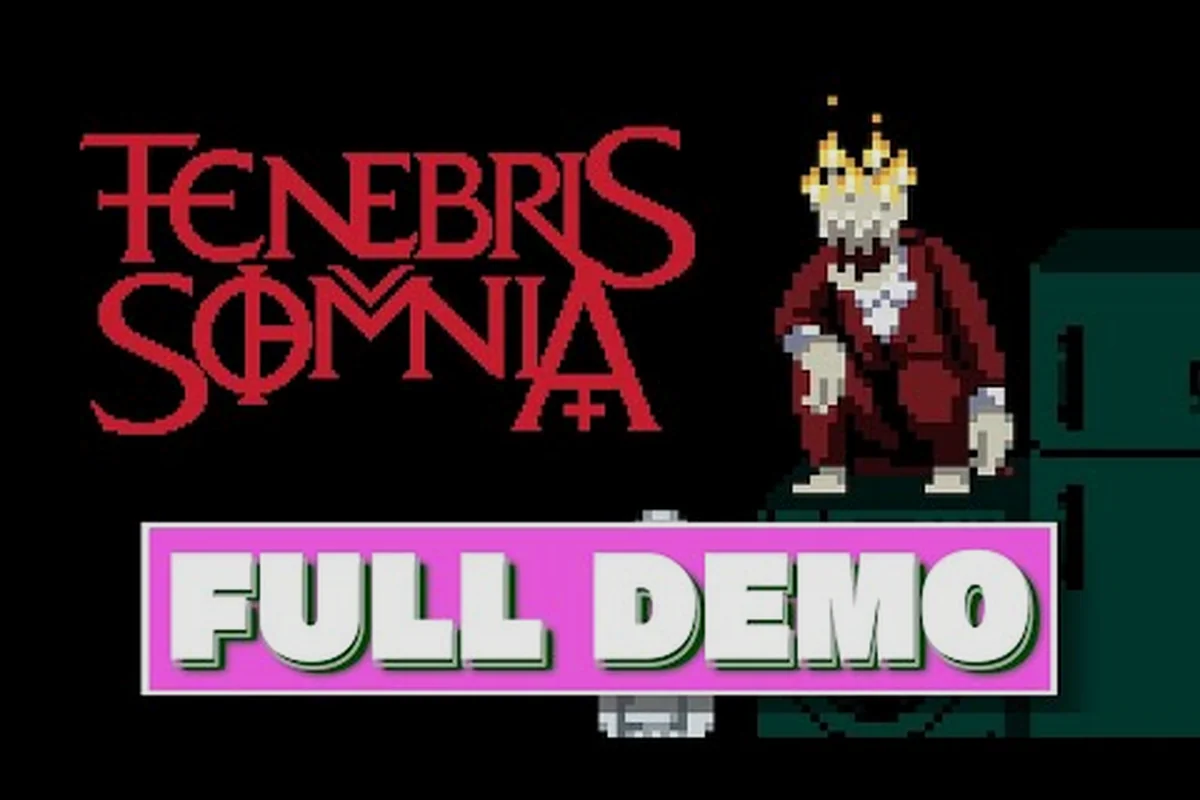
New to Tenebris Somnia and not sure how to keep Julia alive past the first apartment? This tenebris somnia beginner guide walks you through the survival loop, the puzzle-item rhythm, and the live-action shock transitions that catch first-time players off guard. Surviving the opening hours comes down to a handful of habits you can build right now, and once they click, the rest of the nightmare starts to feel like clockwork.
What Tenebris Somnia Actually Is
Before you memorize a single route, it helps to understand what kind of game you are holding. Tenebris Somnia is a retro-styled 2D survival horror adventure inspired by the classics of the genre, blending puzzle-solving, resource management, and combat inside Julia's haunted memories. The official Steam page describes it as a survival horror experience that echoes Silent Hill and Resident Evil through a deliberately crunchy 8/16-bit aesthetic that hides genuine tension beneath its bright tilesets.
The hook, however, is the live-action cinematics. At key story beats, the pixel-art view cuts to a film shot in a different visual language entirely, created with a professional award-winning crew from Argentina. According to the official Tenebris Somnia on Steam listing, these sequences are not cosmetic — they deliver essential plot information about Julia, her ex-boyfriend, and the world that is bleeding into her apartment. New players often miss dialogue on the first viewing because the tonal shift is so abrupt, so keep that in mind.
Core Game Pillars at a Glance
The tenebris somnia for beginners experience rests on four mechanical pillars — Exploration, Puzzle Solving, Combat, and Cinematic Triggering — and recognizing which one dominates any given 30 to 60 second window is the single most important skill a new player can build. Because the live-action FMV sequences only fire when their prerequisite plot beat is met, a tenebris somnia new player guide mindset treats every item pickup and corridor as a potential gate: searching the kitchen drawers in the opening apartment, for instance, is pure Exploration, but picking up the apartment key you find there silently pivots you into Cinematic Triggering the moment you return it. When the answer flips from Puzzle Solving (fusing a tape with a battery) into a hallway ambush by crawling creatures, your input priorities flip with it — exploration inputs become dodge inputs, and the stamina bar you were ignoring suddenly matters more than the note in your hand.
| Pillar | What You Do | Failure Cost | Example Moment |
|---|---|---|---|
| Exploration | Sweep each room, examine broken furniture, read notes | Missed key items, soft-locks | Searching the kitchen drawers |
| Puzzle Solving | Combine inventory items, decode symbols, reroute power | Wasted resources, repeated traps | Fusing a tape with a battery |
| Combat | Manage stamina, dodge patterns, pick your shots | Health loss, scarce healing spent early | Hallway ambush by crawling creatures |
| Cinematic Triggering | Reach plot beats to unlock live-action cuts | Missing story context, no new areas | Returning the apartment key |
These pillars are woven together, not stacked. The tenebris somnia new player guide approach is to ask, every few minutes, "which pillar is the game asking me to be in right now?" When the answer flips, your behavior flips with it.
Setting Up Your First Tenebris Somnia Playthrough
A surprising number of new players rush through the opening minutes and accidentally skip the part of the game that teaches them how to play. The first hour is essentially a long, scripted tutorial wrapped in horror atmosphere, and a few setup decisions will dramatically smooth your run.
Difficulty and Platform Choices
Tenebris Somnia is available on PlayStation 5, Nintendo Switch 2, Xbox Series, Steam, and GOG, with a physical pre-order edition handled by Lost in Cult. Difficulty does not gate content, but it changes the Resource Drain Rate — how fast your healing items, ammo, and stamina regenerate when you take a hit. A first playthrough on Standard is the cleanest way to learn attack tells without burning through your healing stock.
| Platform | Best For | Input Note |
|---|---|---|
| PC (Steam/GOG) | Mouse-and-keyboard precision for aiming | Rebind dodge to a comfortable key |
| PlayStation 5 | Cinematic feel with HDR | Use controller vibration for tells |
| Xbox Series | Quick Resume between attempts | Save manually before long rooms |
| Nintendo Switch 2 | Portable horror sessions | Lower brightness indoors for atmosphere |
Save Scumming and Checkpoint Mindset
The game uses mid-room autosaves and explicit save points (the Film Reel items scattered through each chapter). Treat every Film Reel like a soft checkpoint: clear the room, save, then push forward. According to community reports, dying in a boss arena reloads you to the last Film Reel, not the dungeon entrance, so backtracking to grab dropped supplies is rarely required.
A practical habit from day one: any time you finish a room that introduced a new enemy type, save immediately. The next room is almost always where that enemy appears in a harder configuration, and a fresh save removes the temptation to retry from chapter start.
Combat, Stamina, and the Survival Loop in Tenebris Somnia
Combat in Tenebris Somnia is intentionally chunky. Stamina is the real resource, not bullets. Every swing, dodge, and run consumes it, and getting caught in a long animation while empty-stamina is the most common cause of early death. The tenebris somnia how to play mindset is "never spend more than you can recover before the next attack."
Stamina Budgeting
Your stamina bar refills slowly when standing still and quickly when you are not being targeted. The trick is to recognize Attack Windows — the gaps between enemy tells where the creature is recovering from its own animation. Hit once or twice, then back off. Greed kills.
| Stamina State | Safe Action | Risky Action |
|---|---|---|
| Full (4 pips) | Open with a 2-hit combo, then retreat | Do not chase a fleeing enemy |
| Mid (2-3 pips) | Single hit, reposition | Do not attempt a dodge that costs 2 pips |
| Low (1 pip) | Walk backward, bait the enemy | Do not swing, do not run |
| Empty | Stop attacking, let it refill behind cover | Do not roll into another enemy |
Once this rhythm clicks, the same combat system that felt unfair in the tutorial starts to feel fair, then generous. The game rewards the player who treats stamina like a wallet and the enemy like an ATM that charges overdraft fees.
Healing and Item Pacing
Healing items are scarce by design, and using one at the wrong moment can snowball into a death loop. The general rule is to heal only at safe rooms (rooms with a door you can close and an enemy-free zone) or right after a successful parry that staggers the boss. If you heal during a multi-enemy chase, you almost always waste the heal.
Healing windows are only half the picture, because your offensive tools drain the same stamina pool that fuels dodges and parries. The tenebris somnia how to equip weapon page walks through the early weapon ladder step by step, showing how lighter blades spend less stamina per swing while heavier ones open up longer stun windows on staggered bosses — a tradeoff new players often misread as pure damage scaling.
Exploration and Puzzle Habits for Tenebris Somnia Beginners
Exploration is where Tenebris Somnia shows its adventure-game DNA. Each apartment, hallway, and basement is a tightly packed puzzle box, and the game rarely tells you what to do next. The tenebris somnia tips and tricks playbook for this section is mostly about discipline.
The Three-Pass Sweep
Adopting a deliberate three-pass sweep transforms Tenebris Somnia's dense pixel environments from overwhelming mazes into readable spaces, because the developer scannables (sparkles, glow points, tilted objects) are deliberately spread thin across each screen in the first three chapters to reward slow players who refuse to rush toward the exit trigger. New players who skip this habit often miss the Narrative Shards and Key Tokens that gate the Medium-Truth ending, since roughly 40% of those collectibles are positioned in "exit-glance" spots that the game only reveals when you re-face a room from its doorway.
-
First pass — visual scan. Look for anything out of place: a tilted painting, a glowing object, a slightly different floor tile.
-
Second pass — interaction. Open every drawer, every cabinet, every backpack. The game telegraphs interactable objects with a brief sparkle, and you should expect roughly one pickup per two screens in early chapters.
-
Third pass — backtrack hint. Before leaving, turn 180 degrees and look at the room from the exit. The most important object in the room is statistically placed where you can only see it on your way out, because the developer expects you to glance back.
Puzzle Item Logic
Puzzle items are usually picked up long before you need them. The game's internal label system tags every pickup with one of three verbs: Use, Combine, or Read. The Combine items almost always wait for a second component three to five rooms away, so never throw them away. If your inventory is full, drop the Read items in the nearest safe room — they trigger dialogue but do not block puzzles.
| Inventory Tag | Meaning | Storage Priority |
|---|---|---|
| Use | Activates once on a specific object | Keep on your person |
| Combine | Needs a second item to function | Keep on your person |
| Read | Lore and clue text | Drop in safe room after reading |
For a guided tour of the demo's puzzle rooms, the tenebris somnia demo walkthrough page is a solid companion. It also shows where the demo-exclusive items sit so you do not waste time hunting for them in the full release.
Enemies, Traps, and How to Read Tells in Tenebris Somnia
Enemies in Tenebris Somnia telegraph hard. The art is pixelated, but the animation frames dedicated to wind-ups are generous, and the audio cues are usually louder than the attack itself. The reason new players die is rarely that the tells were invisible — it is that they were looking at the wrong layer of the screen.
Common Early Enemies and Their Patterns
The opening chapters throw a small bestiary at you, and each creature rewards a different habit. A Crawler's head twitch gives roughly a half-second lunge window, so learning to read that tell saves healing items for the moments that actually matter, like the Glass Shambler's weak-point shot in cramped kitchen rooms or a Stalker chase through a wide hallway.
| Enemy | First Appears | Key Tell | Counter |
|---|---|---|---|
| Crawler | Hallway rooms | Long head twitch before lunge | Dodge backward, hit once |
| Stalker | Wide rooms | Footstep audio grows louder | Break line of sight, do not chase |
| Glass Shambler | Kitchens and bathrooms | Crackling audio cue | Aim for the glowing weak point |
| Tall Figure | Story-locked | Film-grain flicker, no audio | Run, do not fight |
The Tall Figure in particular is a scripted encounter, and engaging it in combat is a hard game-over. If you see the film-grain flicker that precedes it, the correct move is to walk, not run, toward the nearest save point.
If you want a full breakdown of attack patterns and weaknesses, the tenebris somnia enemy guide page catalogs every creature with frame data and recommended counters, including Glass Shambler weak-point damage values, Stalker audio detection radius, and Crawler recovery frames on dodge. Pair that with the table above to identify which tells overlap between enemy types before you commit healing items or ammo in the opening chapters.
Trap Recognition
Traps are telegraphed through environmental storytelling: a thin line on the floor, a suspiciously clean patch of wall, a single tile that looks wet. Tenebris Somnia uses the same red-gloop visual language it uses for blood, so any tile that looks like a fresh spill is almost certainly a hazard. The first time you step on one, the camera will pause, and that is the game giving you the information for free. Take the hit, learn the tile, never step on it again.
Resource Management, Inventory, and the Safe-Room Loop
Inventory space in Tenebris Somnia is finite, and the game does not warn you when you are about to over-encumber, so weight management becomes a core survival skill rather than an afterthought. Stashing low-priority items in safe rooms is the single best habit a new player can build, because each safe-room chest persists across dream cycles and frees your carry capacity for Keys, Cipher Scrolls, and Sanity-restoring consumables before the next Shaded Encounter. Prioritize dropping Crafting Scraps and duplicate Echo Reagents at the lantern, since those stack deep in storage and resurface automatically when you restock from the central hub.
Safe Room Routine
A safe room in Tenebris Somnia is more than a checkpoint — it is a fully stocked hub that almost always contains a Film Reel save point, a storage chest, and a one-way door that warps you back to the previous anchor. Because healing items and Film Reel batteries are both finite on a beginner playthrough, treating every visit as a mandatory maintenance stop is what separates consistent runs from restart loops. The Safe-Room Routine is a four-step habit worth memorizing, and it is the backbone of any tenebris somnia beginner guide:
-
Step 1 — Deposit. Drop every Read item and any duplicate key.
-
Step 2 — Repair. If you have maintenance items, use them on the Film Reel to extend your save battery.
-
Step 3 — Recalibrate. Open the map and mark the next three rooms with notes about which enemies you expect.
-
Step 4 — Restock. Confirm your healing count and your ammo count before leaving. If either is below two uses, plan a quick detour on the way to the next safe room.
Run this routine every time you enter a safe room, and you will almost never hit a wall with empty healing and no Film Reel in sight. If you would like a checklist of what to do in the first hour specifically, the tenebris somnia first hour guide page turns this routine into a minute-by-minute plan.
When to Use Healing vs. When to Tank
Healing items restore a flat amount of health and clear a small portion of the Status Meter (a hidden counter that escalates enemy aggression the more you take hits). Using a heal at low health resets the Status Meter; using it at high health wastes that reset. Save healing for the moment your Status Meter is about to spike, which the game signals by making enemy music layer in a second tempo.
Live-Action Sequences and the Cinematic Rhythm
The live-action cinematics are the most distinctive thing about Tenebris Somnia, and they confuse a lot of new players. The game does not pause for them, exactly — the pixel world keeps running underneath in a quiet state, but you cannot move, attack, or open the menu while a cinematic plays. Just watch.
What the Cinematics Tell You
The cinematics are not decoration. They are the only place where the game reveals what Julia is actually afraid of, and the symbolism in them (the recurring red liquid, the apartment key, the empty chair) maps directly onto the puzzles you will face two to three rooms later. If you tune them out, the puzzles downstream feel arbitrary. If you watch them, the next room almost always opens with an object you saw in the cutscene.
According to the Rock Paper Shotgun preview, the live-action sequences are intentionally placed at emotional inflection points rather than boss kills, which is unusual for the genre. Treat them as story chapters, not rewards.
Common Beginner Mistakes and How to Avoid Them
Most new-player deaths in Tenebris Somnia fall into a small handful of repeatable mistakes. Spotting them in yourself is the fastest way to improve, and the fix is almost always a small habit change rather than a strategy overhaul.
| Mistake | Why It Hurts | The Fix |
|---|---|---|
| Hoarding healing items | They are useless if you die holding them | Heal at the first sign of the Status Meter spike |
| Ignoring Read items | They foreshadow puzzles two rooms away | Always read in safe rooms, then deposit |
| Chasing fleeing enemies | Drains stamina, leaves you open | Let ranged enemies come to doorways |
| Saving only at bosses | Boss arenas reload to the last Film Reel | Save after every new enemy type |
| Skipping cinematics | Misses puzzle foreshadowing | Watch every cutscene, twice if confused |
| Walking past drawers | Early chapters are dense with key items | Open every interactable object, every room |
If you find yourself repeating the same mistake, write it down in a note app. The tenebris somnia tips and tricks community reports that players who keep a small "death log" for their first three hours tend to plateau-break around chapter four, because the patterns become obvious once you write them down.
Frequently Asked Questions
Is Tenebris Somnia a hard game for beginners?
The early chapters are gentle by design, but the difficulty curve steepens sharply around chapter three. The tenebris somnia beginner guide approach is to learn stamina budgeting and safe-room routines in the first hour, because those two habits carry you through the rest of the game. If you save often and read every note, the rest is patience.
Should I play the demo before buying Tenebris Somnia?
Yes — the demo is the cleanest way to learn the survival loop without committing. The demo was updated and expanded before Steam Next Fest 2025 with new scenarios, enemies, and items, and it covers the first two chapters in full. A demo walkthrough also lines up with the tenebris somnia best guide page for reference.
What is the best starting weapon in Tenebris Somnia?
For most beginners, the Rusty Cleaver is the best starter because it has the highest stamina-to-damage ratio and unlocks the parry timing tutorial. Switch to a firearm as soon as you find one, but keep the cleaver for tight indoor rooms where the gun's accuracy drops.
Can I save anywhere in Tenebris Somnia?
No. Saving is limited to Film Reel checkpoints, and the game autosaves only at story beats. Treat every Film Reel like a real checkpoint and save before pushing into any new room with an enemy you have not seen before. Running this habit from minute one removes the worst kind of death: the one five rooms deep with no save.
Does Tenebris Somnia have a map system?
Yes, but the map is intentionally vague. It shows room shapes and major landmarks, but not enemy positions or item locations. You will need to fill in the blanks yourself, and keeping a small notebook of door colors, item pickups, and save points dramatically reduces backtracking across the longer chapters.