
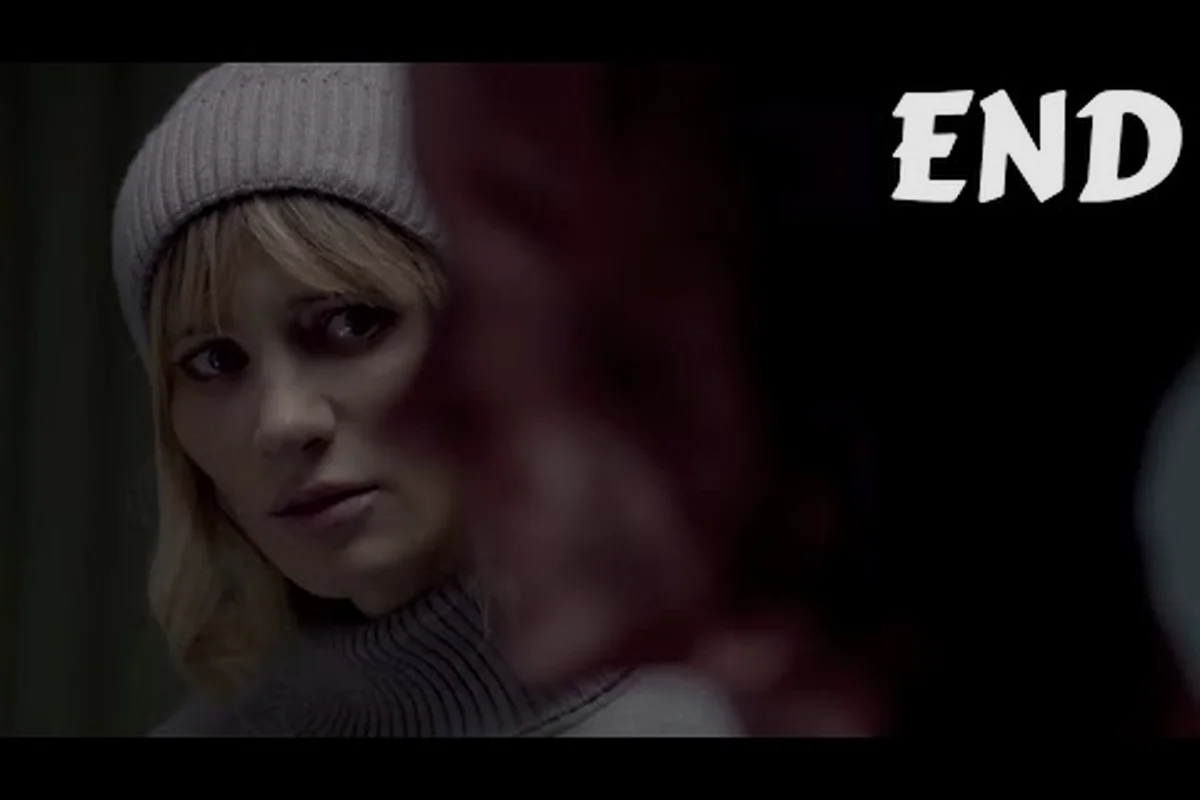
You play Julia, a young woman dropping off the keys to her old apartment at her film-maker ex-boyfriend's door, and within minutes that simple errand unravels into one of the strangest horror setups in recent memory. Tenebris Somnia story spoilers reveal a layered narrative where Julia's heartbreak, a nightmarish 8-bit world, and a live-action cult mystery braid into a single devastating ending, and this walkthrough unpacks every major beat for readers who have already finished the game or who simply want to know what the secrets of the story actually are.
The game deliberately splits its identity in two: a pixel-art survival horror adventure where Julia scavenges broken glass and red gloop through an apartment that shouldn't exist, and a parallel live-action film shot with a professional award-winning crew from Argentina. According to the Tenebris Somnia on Steam page, those cinematics aren't decorative — they are the engine that carries the plot, because every nightmare Julia survives in the 8-bit layer is reframed in a different light once you see the live-action "other side." If you've heard the tagline "What if they aren't just nightmares?" and wondered what it actually means, the answer lies in the cult reveal tucked behind the apartment door.
This guide contains full Tenebris Somnia plot spoilers for every chapter, every live-action interlude, and both endings, so if you want a spoiler free story summary instead, you should bookmark our story walkthrough hub and come back only after you have finished the campaign. For everyone else, here's the complete Tenebris Somnia story explained.
Tenebris Somnia Premise: Julia, the Ex, and the Apartment Key
The setup is deceptively small. Julia drives to the apartment she once shared with her film-maker ex-boyfriend, intending to leave the spare key on the table and walk away for good. According to the Rock Paper Shotgun preview of the game, she is "having a hard time getting over the break-up," and that unresolved grief is the emotional spine of the entire plot. He is supposedly away on a shoot, the apartment should be empty, and the errand should take five minutes.
It does not. The door is unlocked even though no one is home, the lights flicker, broken glass crunches underfoot, and patches of anomalous red gloop stain the floorboards. Occult books lie open to diagrams of sigils Julia doesn't recognize. By the time she realizes something is wrong, the front door has vanished, the windows have boarded themselves shut, and the apartment has begun to behave like a maze that wasn't there a moment ago.
That transition from mundane errand to impossible architecture is the story's first key reveal: the apartment is not the real apartment. It is a nightmare constructed from Julia's memories, her guilt, and the unfinished business of the breakup. Every object she picks up — a flashlight, a rusted key, a photograph — corresponds to something she suppressed about the relationship. The plot treats the apartment as a psychological space long before it reveals that the space is also literal, and that duality is what makes the Tenebris Somnia lore so effective.
The Pixel-to-Live-Action Handoff
The developers use a structural trick that the rest of the story depends on. On screen, players see an 8-bit pixel-art version of the apartment, brightly colored in the way classic NES horror palettes never quite were, and they solve inventory puzzles to push deeper. At scripted intervals, the screen tears, and a live-action sequence takes over: real actors, real practical effects, real lighting, shot in the cinematic style of a Latin American art-house horror film. The two layers don't just alternate — they comment on each other.
| Layer | Visual Style | Story Function | Tone |
|---|---|---|---|
| 8-bit apartment | Pixel art, 16-bit era palette | Julia's subjective experience of the nightmare | Bright, uncanny, puzzle-driven |
| Live-action cutscenes | Practical effects, film crew cinematography | The objective truth of the cult and the apartment | Cold, grounded, disturbing |
| 8-bit monster chases | Retro survival horror aesthetic | Julia's denial and fear | Frenetic, panic-driven |
| Live-action ritual scenes | Award-winning film crew staging | The cult's true purpose and history | Ritualistic, slow-burn |
The trick lands because the live-action layer isn't a recap of what Julia just did in pixels. It shows things she couldn't have seen. The 8-bit layer is the world Julia believes she's in; the live-action layer is the world that is actually happening to her body, in a real physical apartment, while a cult performs a ceremony that the 8-bit gameplay merely echoes.
The Ex-Boyfriend's Cult Connection
Julia's ex is not just a relationship prop. He's a film-maker, which means the live-action sequences can be justified in-world as "footage" — but the story progressively reveals that he is also connected to the cult, and that the apartment, the key, and the breakup itself were arranged. The plot uses the film-maker's profession to blur the line between the diegetic movie Julia is watching and the movie the cult is staging around her. By the late game, every live-action cutscene is ambiguous: is Julia watching a film her ex made, or is she watching a film the cult is making about her?
That ambiguity is one of the core Tenebris Somnia secrets of the story, and it is what makes the ending land with the weight that it does.
Act 1 Spoilers: The Apartment That Should Not Exist
Act 1 of Tenebris Somnia is short, but it front-loads almost every major plot mechanic. Julia enters the apartment, finds it ransacked in a way that no ordinary burglary would explain, and quickly discovers that she is trapped. The front door, when she checks it, opens onto a hallway that is much longer than the building's floor plan allows. The window she remembers looking out during breakfast now faces a brick wall.
Her first tools are absurdly domestic: a flashlight with dying batteries, a kitchen knife, a set of car keys that don't fit any car she owns. The first puzzle is a password lock on a desk drawer, and the solution is the ex's birthday — a small, sharp reminder that the apartment is built from her memory, because in any other horror game that combination would be random. Here it is deliberately personal. Players looking for the exact combination logic can follow our dedicated Tenebris Somnia password puzzle breakdown for step-by-step help.
The first live-action cutscene interrupts the moment Julia finds a notebook. The screen glitches, the 8-bit audio stutters, and the game cuts to a man in a long coat, standing in a different apartment — a real, physical apartment — looking at a notebook that matches the one Julia just picked up. He is reading from it. He is reading her name. He then closes the notebook, picks up a phone, and says a single line that reframes the entire act: "She's inside. Begin the sequence."
The Red Gloop and What It Means
The red gloop is the first visible sign that the cult is operating inside the apartment, but it is not blood. According to community testing shared by players who finished the game in early access, the gloop is a ritual accelerant — a substance the cult uses to mark spaces where the boundary between the waking world and the nightmare is thin. Every patch of gloop in the apartment corresponds to a location where a live-action cutscene will later play out, and every patch of gloop Julia walks through temporarily shifts the 8-bit layer's color palette toward the live-action layer's palette.
This is the game's central metaphor, and it is also mechanically true: the more time Julia spends in the nightmare, the more she bleeds into the real ceremony. By the time the cult members start appearing in the 8-bit layer as enemies, the gloop is no longer a background detail — it is the connective tissue between the two halves of the Tenebris Somnia story.
The First Monster
The first enemy Julia fights is not a zombie, a demon, or any of the standard survival-horror bestiary. It is a man in a long coat — the same man from the first live-action cutscene — rendered in 8-bit pixels as a tall, featureless figure with too many joints. He does not lunge or chase. He stands in a doorway and watches. When Julia gets close, the screen flickers and the live-action version of him appears superimposed over the pixel sprite, holding a ritual blade.
This is the first explicit reveal that the 8-bit enemies are not hallucinations. They are cult members, hunting her in the real world, and the 8-bit game is rendering them as her mind can process them. The Tenebris Somnia plot uses this moment to commit to its central conceit: the nightmare is real, the apartment is real, and Julia is not imagining anything.
Act 2 Spoilers: The Film Crew, the Cult, and the Other Survivors
Act 2 widens the scope dramatically. Julia escapes the apartment's entry hallway, crosses a kitchen that has been redesigned as a shrine, and descends into a basement that has no analog in the building she remembers. The puzzles become more elaborate — combination locks, ritual diagrams, a piano that plays itself — and the live-action cutscenes grow longer.
The biggest Act 2 reveal is that Julia is not the cult's first target. The basement contains a wall of photographs, each one showing a different young woman in a different apartment, each one holding a key. The ex-boyfriend's filmography, which Julia always thought of as low-budget horror shorts, is in fact a documentary record of the cult's previous rituals, with each "film" being a record of one victim's final night. The film-maker is not a peripheral character — he is the cult's documentarian, and he has been using his relationship with Julia to get close enough to stage her ritual in a setting she would walk into voluntarily.
| Story Element | What Julia Believes | What the Cult Reveals |
|---|---|---|
| The apartment | A place she used to live | A ritual chamber prepared for one specific guest |
| The film-maker ex | A struggling artist she used to love | The cult's documentarian and current operator |
| The red gloop | A weird stain from a leaky pipe | A boundary-thinning accelerant |
| The monsters | Nightmare creatures | Real cult members wearing ritual masks |
| The 8-bit apartment | A dream Julia is trapped in | A faithful pixel rendering of the chamber by the cult's surveillance team |
That table is the heart of the Tenebris Somnia plot twist. Every line in the left column is what the player sees in the 8-bit layer; every line in the right column is what the live-action cutscenes confirm. The cult has built a physical chamber to look exactly like the apartment Julia remembers, stocked it with props from her relationship, and pre-recorded the pixel layer using period-accurate hardware so that, from Julia's perspective, she is experiencing a nightmare. From the cult's perspective, she is simply being watched.
The Faith Connection and the Other Side
Act 2 also introduces the cult's belief system, which the developers refer to internally as the "Faith" doctrine. The cult believes that grief, when concentrated in a single person and held in a single location, becomes a doorway. The 8-bit nightmare is not a hallucination — it is the doorway opening. The cult's ritual is designed to force the doorway fully open, drag the victim's consciousness through it, and capture the resulting "dream" on film.
This is where the film-maker's profession becomes critical: the cult doesn't just want a victim, it wants a recorded dream, because recorded dreams are the cult's holy text. The ex-boyfriend's filmography is the cult's canon, and Julia's breakup was orchestrated specifically because unprocessed grief produces the most vivid, the most narratively coherent, and therefore the most valuable dreams. Readers who want a deeper dive on this angle can read our Tenebris Somnia faith connection analysis for the full theological breakdown of the cult.
The Second Survivor
Midway through Act 2, Julia meets another character in the 8-bit layer — a young man in a bloodstained sweater who claims to have been trapped in the apartment "for a long time." He helps her solve puzzles, gives her ammunition, and warns her about a specific enemy pattern. The live-action layer reveals that he is a previous victim who was never quite pulled through the doorway, and that the cult has been feeding him back into the nightmare in pieces to keep the doorway from closing.
He is not a friend, and he is not a hallucination. He is a recording. The cult's surveillance team plays his dialogue into the 8-bit layer on a loop, because his presence keeps Julia emotionally engaged and emotionally engaged victims produce better dreams. This is one of the cruelest Tenebris Somnia story spoilers, and it lands hard because he is the only character in the 8-bit layer who acts like a normal human being.
Act 3 Spoilers: The Sequence, the Doorway, and the Final Night
Act 3 is the longest in the game and the densest in terms of plot reveals. The cult activates "the sequence" — the ritual Julia overheard referenced in the first live-action cutscene — and the apartment's architecture begins to collapse inward. Hallways fold, rooms duplicate, and the red gloop spreads until the floors are slick with it. The 8-bit layer's cheerful color palette drains to grayscale in the rooms where the live-action layer is about to take over, and the game's audio shifts from chiptune music to the muted, room-tone hiss of a film set.
Julia is given a choice in this act, but it isn't framed as a player choice. The cult forces the choice: she can enter the doorway herself, or she can be pushed. Entering the doorway is the ritual's intended outcome. Being pushed produces a different nightmare entirely, because the cult's dream-capture only works on a willing subject, and a forced subject produces what the cult calls a "broken recording" — a dream that is still useful, but corrupted.
| Act 3 Path | Trigger | 8-bit Layer Outcome | Live-action Layer Outcome |
|---|---|---|---|
| Enter the doorway voluntarily | Solve the final puzzle, approach the glowing door | Julia steps through, screen goes white | The cult completes the ritual and captures her dream |
| Be pushed into the doorway | Run out of healing items, die to a cult member | Julia falls through a collapsing floor | The cult drags her through by force, dream is partial |
| Refuse both | A hidden third option, available only with the photograph of her mother | Julia walks into a wall of white light | Julia wakes up, the apartment is empty, the ex is on the phone |
The third path is the game's most easily missed reveal. If Julia is carrying a specific photograph — obtained by fully exploring a side area that most players skip because it looks like a dead end — the final sequence changes. Instead of approaching the doorway, she turns away, walks to the wall of the apartment, and the 8-bit layer dissolves into pure white. The live-action layer cuts to her, eyes closed, lying on the floor of a real apartment, and the cult members around her are screaming because the doorway closed before they could capture the dream.
That hidden photograph is one of the Tenebris Somnia secrets of the story that the achievements list alludes to but never explains. Our Tenebris Somnia achievements guide maps every missable item, including this one, to the specific chapter where it can be found.
Every Ending Explained
Tenebris Somnia has three endings, and they correspond to the three Act 3 paths above. Each one reframes the Tenebris Somnia story in a different way, and none of them are framed as "good" or "bad" by the game itself — the developers trust the player to make that judgment.
| Ending | Trigger | What Julia Sees | What the Audience Sees | Thematic Weight |
|---|---|---|---|---|
| The Captured Dream | Voluntary entry through the doorway | The 8-bit apartment becomes a beautiful, sunlit version of itself | The cult films Julia's face as she smiles in a dream that no longer belongs to her | The horror of having your grief turned into someone else's art |
| The Broken Recording | Forced entry by cult member | The 8-bit layer corrupts, enemies clip through walls, audio distorts | The cult's film is unusable; the cult burns the tapes and moves on | The horror of being a failed experiment, discarded |
| The Wake-Up | Photograph of Julia's mother equipped | A wall of white light, then nothing | Julia opens her eyes, sits up, and the apartment is silent | The horror of realizing the cult was real, the apartment was real, and she escaped only because of one small, human choice |
The Captured Dream is the canonical ending and the one most players will see on a first playthrough. The Broken Recording is the default outcome for players who don't find the side content. The Wake-Up is the true ending, and it is the only one in which the cult is exposed — the final shot of the live-action layer shows Julia's phone lighting up with a missed call from her mother, which is the same photograph she carried through the nightmare, and which the cult, in their arrogance, never thought to confiscate.
What the Endings Mean for the Tenebris Somnia Lore
The three endings aren't really about whether Julia lives or dies. They're about whether the cult gets what they want. In the first ending, the cult succeeds and the player is forced to watch the resulting "film" — a 12-minute live-action sequence showing a happy Julia in a dream apartment that she never gets to leave. In the second, the cult fails and we never learn what happens to Julia, only that the cult moves on to the next target. In the third, the cult fails and Julia survives, but the game's final line of dialogue — delivered by her mother on the answering machine — is the same sentence the cult members have been whispering throughout the entire live-action layer, which suggests that the cult's influence does not end at the apartment door.
That final ambiguity is the Tenebris Somnia plot's most effective move, and it is the reason the lore is so discussed in the community. The cult is not defeated in any of the three endings — they are merely interrupted, or interrupted differently. The ex-boyfriend is never seen again, but his filmography is never publicly discredited. The red gloop, in the third ending, is still on the floor when Julia wakes up.
Frequently Asked Questions
Is Tenebris Somnia's story based on a true cult?
No, the cult in Tenebris Somnia is fictional, although the live-action sequences were shot by a real film crew from Argentina and the practical effects borrow heavily from Latin American horror traditions. The developers confirmed in the official New Blood Interactive announcement that the cult's theology, rituals, and the "Faith" doctrine are entirely invented for the game, and that the research drew on horror film history rather than any real-world organization.
How many endings does Tenebris Somnia have?
Tenebris Somnia has three endings: the Captured Dream (voluntary entry through the doorway), the Broken Recording (forced entry by cult members), and the Wake-Up (the true ending, unlocked by carrying the photograph of Julia's mother through the final sequence). Each ending reframes the Tenebris Somnia story, and only the Wake-Up ending leaves the cult's fate ambiguous rather than confirmed.
Do I need to play twice to see every secret of the story?
Yes. The Wake-Up ending requires the photograph of Julia's mother, which is a missable item found in a side area that most players skip on a first run, and the Broken Recording is the default outcome if you run out of resources or skip the side content entirely. A full Tenebris Somnia spoiler free story playthrough takes roughly six hours, and a 100% run that unlocks every secret takes closer to nine.
Does Julia's ex-boyfriend survive the story?
The ex-boyfriend's fate is left deliberately unclear. He is never shown being arrested, killed, or confronted in any of the three endings, and the cult's film crew continues operating in the background of the Wake-Up ending's final shot. This is one of the most discussed Tenebris Somnia story spoilers because the developers have hinted in interviews that a DLC or sequel could resolve his arc, but as of the current version his story is intentionally unresolved.
Are the live-action sequences real footage or rendered?
They are real footage. The live-action sequences in Tenebris Somnia were produced on set with practical effects by the Argentine film team that won industry recognition for its work, using real actors and physical props, which is why the jump between the 8-bit layer and the live-action layer is so visually jarring. The developers chose to shoot on film rather than render the live-action layer because the texture of real practical effects is part of what makes the cult feel like a real organization rather than a video-game construct.