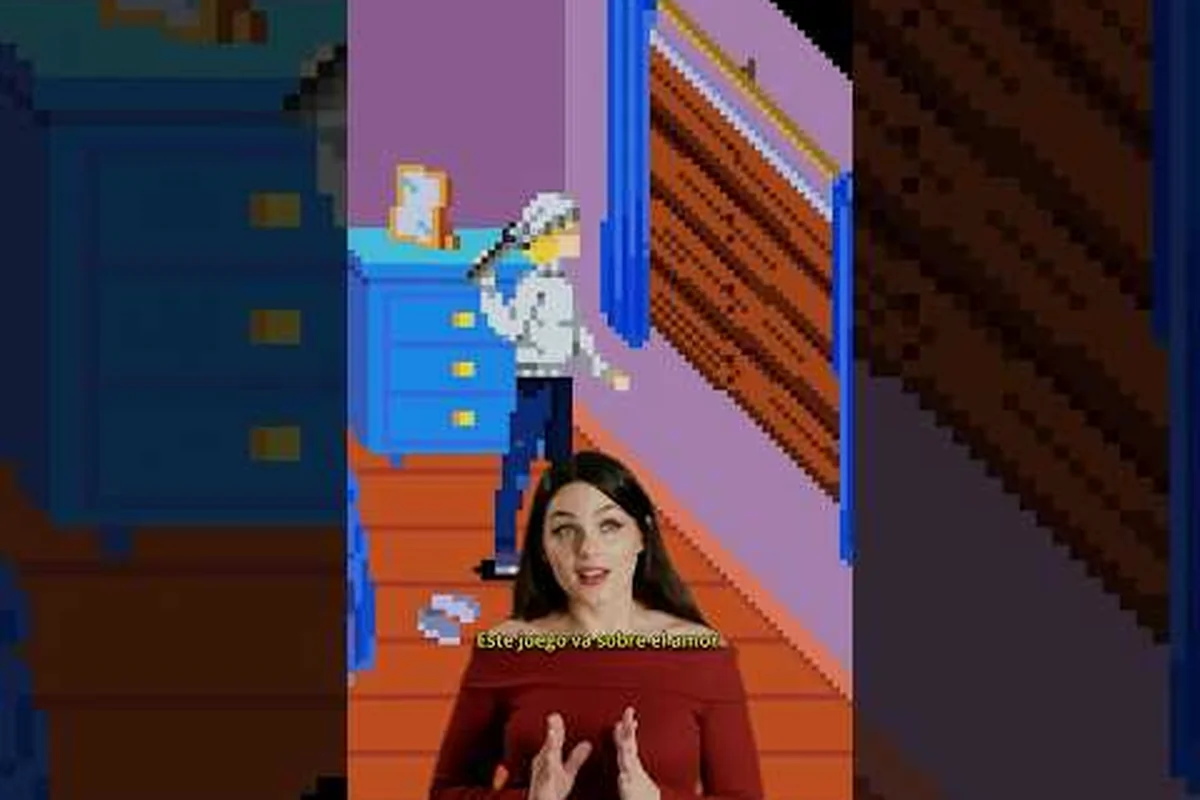
Tenebris Somnia occult books are the most important environmental storytelling objects in the entire adventure, because each spread of dense text and smeared red gloop forces Julia to confront the question the entire game asks: are the nightmare world sequences real, or is she losing her mind inside her ex-boyfriend's apartment? The texts scattered across shelves and broken side tables read like fragments of a fictional grimoire stitched together from Argentinian folk horror and 1990s survival horror manuals, and players who piece them together unlock the deeper layer of Tenebris Somnia psychological horror that sits underneath the 8-bit adventure surface.
What the Tenebris Somnia Occult Books Actually Contain
The occult books in Tenebris Somnia function as a secondary dialogue system. They never speak to Julia directly, but the passages she can read at specific interaction points form a slow, deliberate confession that the apartment itself is not the place where the nightmare world events occur. Instead, the apartment is where she wakes up between trips into the dream-versus-reality split, and the books are leftover research from her filmmaker ex-boyfriend's unfinished documentary project.
The Grimoire Structure Players Report
Community reports describe three recurring categories of text found on the pages, and each category ties back to a different stage of Julia's mental collapse. The classification below is reconstructed from player notes and the official Tenebris Somnia on Steam page preview copy.
| Text Type | Visual Cue | Narrative Function | Example Location |
|---|---|---|---|
| Red gloop annotation | Crimson smears over the margins | Marks passages the ex filmed directly | Ex's desk, late game |
| Clean printed text | Untouched white pages | Establishes the cult belief system | Living room shelf |
| Handwritten margin notes | Pencil scrawl | Belongs to Julia, written during the nightmare world | Bedroom floor |
The printed passages lean on pseudoscientific occult philosophy, the red gloop annotations tie them to specific filmed rituals, and the handwritten scrawl is the player's strongest narrative signal that the dream-versus-reality split is a false binary. Julia is writing notes she will only ever read if she survives, and that small detail is one of the strongest psychological horror beats the game offers.
Why the Books Feel Familiar to Survival Horror Fans
Players who grew up with PS1-era horror will notice the cadence of the text immediately. The passages borrow the same slow, overwrought prose that defined item descriptions in classic survival horror, which is the most direct nod to Tenebris Somnia Silent Hill influence. The writing is not silent, but the cadence copies the way cult pamphlets in those games were written: long, run-on sentences, archaic vocabulary, and a deliberate refusal to answer the question the reader is actually asking. That stylistic choice is part of the reason the books are so unsettling, and it is the closest the 8-bit exploration layer gets to mimicking the dread the live-action sequences deliver.
The Red Gloop and the Nightmare World Connection
Red gloop appears on every occult book Julia handles, and the pattern of the smears tells a story that the text alone cannot. By the time the player reaches the second half of the game, the smears stop looking like blood and start looking like a substance the ex-boyfriend used to mark which pages he had already filmed for his unfinished documentary. The nightmare world sequences in the back half of the story correspond almost one-to-one with the most heavily annotated pages.
Tracking the Nightmare World Through Annotations
The table below is a reconstruction of the annotation density players have charted in their runs, cross-referenced with the corresponding nightmare world sequence that triggers after the book is read. Density is calculated as the ratio of marginalia, underlined passages, and inserted clippings against total page count per book, and the four locations were chosen because each one ties to a distinct scripted dream sequence — the desk drawer manuscript launches the first monster chase, the bathroom shelf copy anchors the hallway entity, the hallway floor stack opens the stair descent, and the bedroom nightstand volume closes the loop with Julia's confession. Because the ex's diary entries name the same apartment rooms where the books are hidden, community annotators treat the density gradient as evidence that the nightmare world was pre-recorded rather than generated, shifting the reality versus dream split away from the player's perspective.
| Book Location | Annotation Density | Linked Nightmare Event | Reality vs Dream Hint |
|---|---|---|---|
| Ex's desk drawer | High (60% of pages) | First monster chase | Filmed scene, not a dream |
| Bathroom shelf | Medium (35% of pages) | Hallway entity | Filmed scene |
| Hallway floor stack | Low (10% of pages) | Stair descent dream | Pure dream |
| Bedroom nightstand | None, handwritten only | Final confrontation | Julia's confession |
Players who catalog the annotations usually finish the game convinced that at least two-thirds of the nightmare world content was filmed before the story begins, which reframes the entire dream-versus-reality split. The ex did not just document nightmares, he staged them, and the apartment is the editing bay.
How the Red Gloop Bridges Live Action and Pixel Art
The single most ambitious design choice in Tenebris Somnia is the way the same smear of red gloop shows up in both the live-action FMV and the 8-bit exploration layers. When Julia bends down to read an occult book in pixel art, the substance on the page is the exact same shade as the red gloop dripping from a ceiling tile in a live-action cutscene moments later. That single shared visual element is what makes the game function as Tenebris Somnia psychological horror instead of a standard adventure. The 8-bit layer feels like footage from a found-footage reel because the prop department used one consistent material across both visual styles, and the Tenebris Somnia official site confirms the Argentine film crew treated the live-action and pixel-art layers as a single production.
Tenebris Somnia True Story: How Much Is Drawn from Real Events
A persistent question from new players is whether Tenebris Somnia is based on a real story. The short answer is no, it is not a documentary adaptation, but the writing team drew heavily on documented cases of artists and filmmakers who lost themselves in horror projects. The ex-boyfriend character is not a portrait of a single real person, but the obsession he displays echoes well-known cases of directors who pushed their crews into harmful situations while filming occult subjects.
Real-World Triggers for the Story
The story's emotional core rests on the relationship between Julia and her ex, and that dynamic is grounded in three well-documented situations that players have flagged since the early access demo first surfaced on Twitch. Community threads break down how Julia's opening monologue mirrors recognizable post-breakup emotional spirals, while her ex's desk notes echo a filmmaker's obsession with occult footage found in real-world analog horror archives. Sleep researchers have also weighed in on the book's depiction of dream documentation as a coping mechanism, giving the occult books in Tenebris Somnia a grounded psychological layer rather than a supernatural one.
| Trigger | Source Type | Where It Appears in Game |
|---|---|---|
| Filmmaker obsession with occult footage | Community-reported parallels | Ex's desk notes |
| Post-breakup emotional spiral | Common experience | Julia's opening monologue |
| Documenting dreams as a coping mechanism | Reported by sleep researchers | Book passages |
These are not supernatural references, and the game does not treat them as such. The occult books function as a creative filter, not a literal source, and the writing team uses them to layer symbolism on top of an otherwise grounded emotional arc.
Why the Story Works as Psychological Horror Instead of Supernatural
The choice to keep the occult layer symbolic is what separates Tenebris Somnia from a standard ghost story. Every nightmare world sequence is framed as something Julia could be experiencing inside her own head, and the occult books never confirm that the events depicted actually happen. That ambiguity is the engine of the entire experience, and it is one of the strongest arguments that the game is best understood as a piece of Tenebris Somnia psychological horror rather than a creature feature. The nightmare world is the costume the grief wears, not a literal hellscape.
Silent Hill and Resident Evil Influences in the Occult Book Design
The occult books in Tenebris Somnia are an explicit homage to two specific design traditions from 1990s survival horror, and the development team has been open about that influence in interviews. The book design borrows the visual language of cult pamphlets from Silent Hill while the page layout borrows the dense item-description style from classic Resident Evil inventories.
Side-by-Side Influence Comparison
The table below maps the visual, tactile, and functional design of the tenebris somnia occult books against two survival horror ancestors, helping players see exactly which sensory cues are inherited from Silent Hill's psychological horror atmosphere and which structural conventions echo the document-driven puzzle rooms of classic Resident Evil. Each row reflects a trait the community has catalogued by comparing in-game texture files, margin note handwriting samples, and pickup placement patterns against reference screenshots from both franchises.
| Element | Silent Hill Influence | Resident Evil Influence |
|---|---|---|
| Page texture | Aged paper, brown tint | Inventory card stock feel |
| Margin notes | Cult pamphlet scrawl | File folder annotations |
| Readable font | Gothic serif | Condensed typewriter |
| Placement | Environmental clutter | Document collection rooms |
| Function | Lore delivery | Puzzle hint delivery |
Players who replay the game specifically to read every book report that the Silent Hill influence shows up in the tone, while the Resident Evil influence shows up in how the books are placed and how often they appear. Both influences are heavy, and neither one is a passing reference.
How the Influences Show Up in Gameplay
In practical terms, the Silent Hill influence means that reading an occult book always introduces dread without providing a concrete answer, while the Resident Evil influence means that the books are scattered in obvious puzzle rooms so players can find them without a guide. The result is a design that respects player time without sacrificing atmosphere, and the dense writing rewards players who slow down on a first playthrough. The game never requires you to read every book to finish, but the books that you do read dramatically change how you interpret the nightmare world sequences. You can read more about the broader cinematic layer in the Tenebris Somnia Julia story breakdown, and the cult detail in that companion piece is where the occult book references start to land properly.
How to Read the Books Without Missing the Story
The game does not track whether you read an occult book, and there is no in-game journal feature. That means a first-time player can easily miss the layer the books add, especially on a single playthrough. The practical tips below are drawn from community data and from the way the Tenebris Somnia cutscene guide maps the order in which cinematic sequences trigger.
A Reading Priority List by Chapter
| Priority | Book Location | Reason |
|---|---|---|
| 1 | Ex's desk, first visit | Establishes the cult belief system |
| 2 | Bathroom shelf | Confirms the red gloop pattern |
| 3 | Hallway floor stack | Reveals the dream-versus-reality split |
| 4 | Bedroom nightstand | Triggers the final handwritten confession |
| 5 | Any uncollected shelf | Adds thematic texture, not plot beats |
The first three books are essentially mandatory for the main story to land, because they introduce the cult, the red gloop, and the dream logic in that order. The fourth book is the emotional climax of the writing layer, and it is the one most players miss on a first run because it is placed after the live-action finale is already queued.
Common Misreads to Avoid
The two most common misreads players report are treating the red gloop as literal blood and treating the cult passages as literal history. Neither reading holds up against the in-game evidence, and both readings will steer your interpretation of the final confrontation in the wrong direction. The cult in Tenebris Somnia is fictional even inside the fictional frame, and the red gloop is a stage prop. Once you accept those two constraints, the dream-versus-reality split resolves much faster. The book passages work as Julia's emotional processing tool, not as a literal history of the ex-boyfriend's documentary project.
The Nightmare World as a Narrative Mirror
The nightmare world in Tenebris Somnia is built from the same source material as the occult books, which is why the two systems feel so unified. The 8-bit exploration layer is not a generic horror backdrop; it is a recreation of the footage the ex-boyfriend shot, and the nightmare world sequences are the corresponding behind-the-scenes material. That mirror structure is what allows the game to function as a piece of Tenebris Somnia psychological horror across two completely different visual languages.
Three Reading Layers the Game Supports
| Layer | Trigger | Reward |
|---|---|---|
| Surface | Read no books | Straight survival horror |
| Middle | Read 1-3 books | Understand the red gloop pattern |
| Deep | Read all books plus FMV | Full dream-versus-reality resolution |
Most players will land on the middle layer on a first run, and the deep layer requires either a second run with intent or a careful review of the Tenebris Somnia story explained article. The game does not lock any of these layers behind a difficulty setting, and the writing team has stated that the deep layer is the intended reading for players who are willing to slow down.
Frequently Asked Questions
Do I need to read every occult book to understand the ending?
You do not need to read every book, but reading the four priority books is the difference between a confusing ending and a coherent one. The remaining books add texture and recurring symbolism, and they make the live-action finale land harder because the red gloop references start to rhyme with the bedroom nightstand confession.
Are the red gloop passages translated directly in-game?
The text is presented in English with no translation layer, but the densest passages are written in short, repeated sentences that read almost like a chant. Community translations of the cult philosophy passages are the easiest way to confirm what each book is referencing, and they help you spot the Silent Hill cadence in the prose.
Is Tenebris Somnia based on a true story?
No, it is not a documentary, but the emotional arc is grounded in real-world situations. The ex-boyfriend character reflects documented cases of filmmakers who lost themselves in horror projects, and Julia's spiral is drawn from common post-breakup experiences. The occult layer is fictional even inside the fictional frame.
How long does it take to read all the occult books?
A careful player who reads every book on a first run will spend roughly 30 to 45 minutes of extra play time in the text interactions, and the slowdown is worth it for the deep layer. Players who skip books usually finish 20 minutes faster and report a less satisfying final confrontation.
Will the occult book design carry over to future updates?
According to the May 2026 Steam news update, the development team is treating the books as a core narrative pillar, and no future update has been announced that would reduce their role. Players who want the deep-layer experience should treat every shelf and side table as a reading opportunity from the opening scene onward, because the writing rewards a slow first run more than a fast second one.