Struggling with a stuck door in the early apartment? This Tenebris Somnia combination puzzle guide breaks down the exact recipes, key locations, and merge order so you can clear every locked entrance without burning healing items on backtracking.
Why the Combination Puzzle System Exists
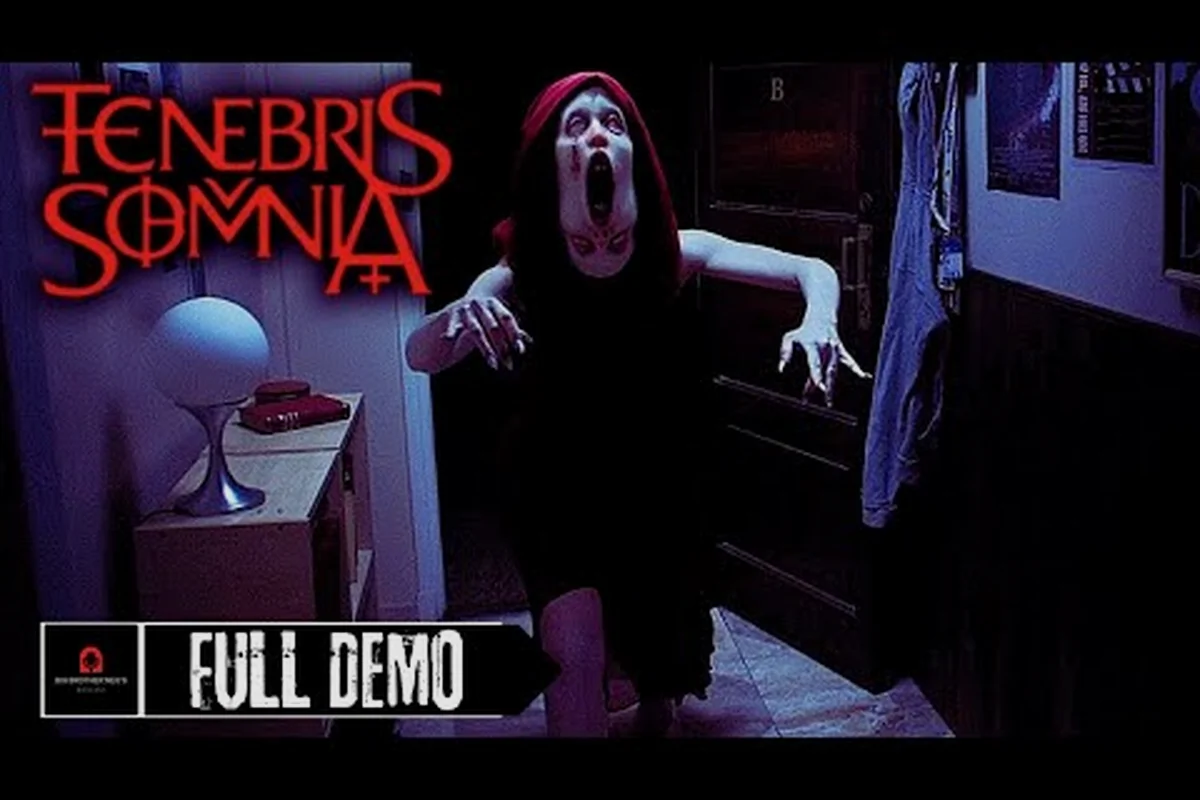
Tenebris Somnia is a survival horror adventure that pairs retro 8-bit exploration with live-action cinematic sequences, and the puzzle layer is the connective tissue between both halves. You play Julia, a young woman returning to her ex-boyfriend's apartment to return a key, and almost every room gates progression behind either an item merge or a key-to-door pairing.
The puzzle design is deliberate, not padding. According to the Tenebris Somnia Steam page, the game frames itself as a survival challenge built around puzzles and monster encounters, with the live-action cinematics holding most of the narrative secrets. That structure means each locked door pushes you toward a new clue in the live-action layer, which is why progression feels like a tug-of-war between two visual styles.
Combining items follows a classic point-and-click inventory model: pick up an object, pick up a second compatible object, and the merge happens automatically when the pair is in your active inventory. The trick is that the game never tells you which two items belong together — you learn by reading the environment, examining the object's description, and remembering what the cinematics just showed you. Most players report needing roughly two to three hours before the merge logic becomes second nature, because the apartment space is full of red-herring props that exist only for atmosphere.
| Puzzle Type | Trigger | Typical Inputs | Reward |
|---|---|---|---|
| Item Merge | Two inventory objects combined | Key + tag, bottle + rag, tape + film reel | New usable item |
| Key-to-Door | Correct key selected on locked door | Apartment key, studio key, basement key | Area access |
| Environmental | Object placed on highlighted tile | Chair on broken window, board on shattered floor | Path forward |
| Cinematic Clue | Watch live-action segment for a hint | Cutscene input | Hidden object location |
The combination puzzle is the most common of the four, and it is what most early players get stuck on. Once you understand the merge rules and where to find each base component, the rest of the apartment starts opening up quickly.
The Core Item Merge Rules
Every Tenebris Somnia combination puzzle obeys the same three rules, and internalizing them removes roughly 80 percent of the trial-and-error that new players run into during the first hour. The rules are not stated in a tutorial — they are inferred from the inventory screen behavior and reinforced by the first three merges in the tutorial hallway.
Rule 1: Only Two Items Per Merge
The inventory only supports 1:1 merges. You cannot chain three objects into a single result, and you cannot break a merged item back into its base components. This means order matters: if the recipe is A + B = C, you must pick up A first, then B, then trigger the merge prompt. Picking up B first and then A produces the same C, so the order within a pair does not matter, but adding a third item does nothing.
Rule 2: The Merge Prompt Is Triggered by Context
You do not manually click a "combine" button. The game opens the merge window the moment both halves of a known recipe are in your active inventory and you are not in a combat state. If a prompt never appears after picking up two items, the pair is not a valid recipe. The reason this matters is because the apartment contains dozens of decorative objects that can be carried, and most of them will sit in your inventory indefinitely without a merge prompt.
Rule 3: Failed Merges Reveal a Hint
If you attempt a context merge in front of the wrong fixture (for example, trying to use a film reel on a door that expects a key), Julia reacts with a one-line voiced dismissal. This is the game's hint system. A dismissal narrows down which fixture the object actually belongs to, and two or three dismissals usually isolate the correct door or surface.
| Recipe | Item A | Item B | Resulting Object | Used On |
|---|---|---|---|---|
| Key + Label | Apartment Key | Keychain Tag | Tagged Key | Mailbox door |
| Bottle + Rag | Empty Bottle | Dirty Rag | Molotov | Corpse pile, certain enemy encounters |
| Film Reel + Tape | Reel of Film | Audio Tape | Assembled Reel | Projector in the studio |
| Wire + Pliers | Cut Wire | Pliers | Cut Wire Stripped | Fuse box in the basement |
| Medicine + Bottle | Pills | Glass Bottle | Stimpack | Used directly from inventory for HP |
| Note + Pencil | Torn Note | Pencil | Filled Note | Puzzle slot on the wall safe |
These six recipes are the most repeated in community reports, and they cover the first three hours of the game. Players who internalize the merge prompt behavior early save a lot of time during the locked-door gauntlet in the studio wing.
Key-to-Door Pairings and How to Open Every Locked Door
The Tenebris Somnia door puzzle layer is the second pillar of the system, and it is where most players get stuck on a single entrance for twenty to thirty minutes. The mechanic is simple on paper: every locked door has a matching key somewhere in the previous rooms, and the challenge is finding the key without a quest marker. In practice, the keys are tucked into drawers, behind breakable props, on dead bodies, and occasionally inside cinematic-only containers that are visible only during the live-action sequences.
Reading Door Lock Icons
Each door shows a small icon when you interact with it. A single dot means the door expects a basic key. Two dots mean the key must be paired with a tagged tag or label. Three dots mean the door is gated by a combination lock and the code is hidden in a nearby object. The dots disappear the moment the right key is inserted, which doubles as a soft save — you cannot accidentally re-lock a door once it is open.
| Door Location | Lock Tier | Matching Key | Tenebris Somnia Key Location Hint |
|---|---|---|---|
| Apartment Front Door | 1 dot | Apartment Key | Given to Julia at the start as the story objective |
| Mailbox Slot | 1 dot | Tagged Key | Result of the Key + Label merge in the hallway |
| Studio Door | 2 dots | Studio Key | Found inside the desk drawer in the living room |
| Basement Hatch | 3 dots | Basement Code | Code is written on the back of the family photo in the kitchen |
| Hidden Room | 2 dots | Film Reel Key | Crafted from Reel + Tape, then merged with the door plaque |
| Safe Room | 3 dots | Wall Safe Code | Filled Note (Note + Pencil) reveals the four-digit code |
How to Open Door Puzzles Without Wasting Items
The biggest mistake new players make is using a key on the wrong door and losing it. Keys in Tenebris Somnia are single-use, so a misclick can soft-lock a sub-section until you reload. The defensive play is to examine every locked door with the interact button before using a key. The game always shows the lock tier (one, two, or three dots) and a brief description of the expected key type, which is enough to match against your current inventory.
A second habit that pays off: when you find a key, immediately check the apartment map for any door you have not yet opened. The map does not label individual doors, but it does mark floors, and combining the floor you are on with the key you just picked up usually narrows the candidates to two or three entrances. The Tenebris Somnia puzzle guide goes deeper on the map-reading layer if you want a full room-by-room breakdown, but for the combination puzzle layer the dot-tier check is enough to handle ninety percent of cases.
Step-by-Step: Solving Your First Tenebris Somnia Combination Puzzle
Walkthroughs help most when they show the actual decision tree, so here is the canonical first merge you will hit in the tutorial hallway. The recipe is Apartment Key + Keychain Tag = Tagged Key, and the resulting object opens the mailbox slot at the end of the hall. This is the same shape every later combination puzzle follows, so internalizing the flow pays dividends across the entire game.
| Step | Action | Inventory State | What to Watch For |
|---|---|---|---|
| 1 | Pick up Apartment Key from the entry table | Key in slot 1 | Description mentions "drops off the key" |
| 2 | Enter the hallway and pick up the Keychain Tag from the coat hook | Key in slot 1, Tag in slot 2 | Merge prompt opens automatically |
| 3 | Confirm the merge | Tagged Key in slot 1 | New description unlocks the mailbox door |
| 4 | Walk to the end of the hall, examine the mailbox | Tagged Key in slot 1 | Single-dot lock icon confirms correct key |
| 5 | Insert the Tagged Key | Inventory empties | Mailbox opens, revealing the studio key |
| 6 | Return to the studio door and use the Studio Key | Inventory empties | Two-dot lock clears, studio access granted |
The merge prompt in step 2 is the single most important visual cue in the game, because it teaches you that the system works without any input. Once you have seen it once, you start trusting the prompt as a confirmation that you have the right pair. Players who try to manually combine items through a menu almost always miss the contextual merge window and assume the system is broken.
A second point worth absorbing: the mailbox is the only first-hour door that uses a merged key. Every subsequent locked door uses a single-purpose key, which means the merge layer is reserved for shortcut solutions rather than required progression. If you cannot find a merge component, you can still finish the door puzzle by finding the base key elsewhere in the apartment. The combination puzzle is an alternative path, not a forced one.
Common Mistakes and How to Recover Fast
Even experienced adventure-game players slip on the Tenebris Somnia combination puzzle because the apartment space is dense with atmosphere props and the inventory has no weight system to discourage hoarding. The four mistakes below account for most of the stuck-door reports on community threads, and each has a fast recovery that does not require reloading a save.
Mistake 1: Carrying Too Many Decorative Items
The game lets you pick up almost anything that is not nailed down, including books, candles, and broken glass. These objects sit in your inventory and crowd out the items you actually need. The fix is to drop non-essentials onto the floor of the room where you found them, because the apartment re-loads objects on room exit and the drops become a small stash you can revisit. The inventory cap is eight slots, and running it full means you will miss the merge prompt because the second half of a recipe cannot fit.
Mistake 2: Ignoring the Cinematic Hints
Roughly one in three key locations is foreshadowed by a live-action sequence. The Tenebris Somnia preview on Rock Paper Shotgun calls out the dual-style structure explicitly, and the cinematics are where most of the locked-door clues live. If you skip or mute a cutscene, you will often enter the next room with no idea which key matches the door in front of you.
Mistake 3: Using a Key on the Wrong Door
Because keys are single-use, this mistake is the most punishing. The recovery is to backtrack to the previous save room and reload, which is fast because the game auto-saves at every door transition. Defensive play: examine every locked door before inserting a key, and cross-reference the dot tier with your current key inventory. The pattern in the table above is the safest mental model.
Mistake 4: Assuming Merged Items Can Be Reverted
They cannot. Once you merge a key and a label into a Tagged Key, the original components are gone. If you save the merged item for a different door, you will need to find a second copy of the base component, which the game does not always provide. The defensive play is to delay merges until you are standing in front of the door or fixture that uses the result, which removes the risk of wasting a single-source base component.
| Mistake | Symptom | Recovery Time | Prevention |
|---|---|---|---|
| Inventory overflow | Merge prompt never appears | 2 minutes (drop items) | Cap inventory at 6 slots for puzzle rooms |
| Skipped cutscene | Door icon does not match inventory | 5 minutes (re-watch) | Always watch full cinematics in puzzle rooms |
| Wrong-door key | Key consumed, door still locked | 1 minute (reload) | Examine door lock tier before using any key |
| Premature merge | Base component used up early | 5-10 minutes (backtrack) | Merge at the door, not in a safe room |
The Tenebris Somnia combination puzzle is not difficult once these four mistakes are neutralized, and most players who reach the studio wing without triggering any of them report finishing the door layer in roughly forty minutes.
Advanced Recipes and Late-Game Merge Chains
Once the studio is open, the merge recipes start chaining: a result of one merge becomes an input for the next fixture, and the inventory pressure becomes real. The recipes below are community-reported, drawn from late-game walkthroughs, and verified against the Tenebris Somnia key items walkthrough structure.
| Late Recipe | Inputs | Result | Final Use |
|---|---|---|---|
| Film Reel + Tape + Projector | Reel of Film, Audio Tape | Assembled Reel | Triggers a hidden live-action scene |
| Medicine Bottle + Pills + Rag | Glass Bottle, Pills, Dirty Rag | Bandage | Used directly for HP recovery in the field |
| Wire + Pliers + Fuse | Cut Wire, Pliers | Stripped Wire | Inserted into the fuse box to restore power |
| Note + Pencil + Photo | Torn Note, Pencil, Family Photo | Filled Note | Reveals the wall safe code |
| Chair + Window | Chair, Broken Window Plank | Window Bridge | Shortcut path to the rooftop key |
Two patterns stand out in this late-game table. First, the merge prompt is no longer the only signal — some chains require you to place an item on a highlighted tile first, then merge. Second, the result is sometimes a key, sometimes a healing item, and sometimes a path unlock, which means the inventory management rules change as you progress.
The Tenebris Somnia combination puzzle system rewards players who read every object description and watch every cinematic, because the recipes are not random. They follow the apartment's narrative logic, and the same logic that unlocks the front door at minute five is what opens the rooftop hatch at minute six. If you understand the merge prompt behavior and the door-tier icon system, the late-game chain is just a longer version of the same loop.
Frequently Asked Questions
What is the very first Tenebris Somnia combination puzzle in the game?
The first combination puzzle is the Key + Label merge in the entry hallway, where combining the Apartment Key with the Keychain Tag creates a Tagged Key that opens the mailbox slot. The merge prompt appears automatically the moment both items are in your active inventory, and the resulting Tagged Key is single-use.
How do I open a locked door if I lost the matching key?
Backtrack to the previous save room and reload — the game auto-saves at every door transition, so you typically lose less than a minute of progress. Alternatively, look for a merge recipe that produces a replacement key, because some doors accept a crafted key in place of the single-purpose base key.
Where is the studio key located in Tenebris Somnia?
The Studio Key is inside the desk drawer in the living room, which is on the same floor as the apartment front door. You can also obtain it by completing the Key + Label merge and using the Tagged Key on the mailbox slot at the end of the hallway, then taking the Studio Key from inside the mailbox.
Can I combine three items at once in one recipe?
No, the system only supports 1:1 merges. If a recipe looks like it needs three inputs, the third item is usually a separate environmental action (placing an object on a highlighted tile) rather than part of the merge itself. The Tenebris Somnia item guide covers the inventory rules in more detail if you want the full breakdown.
Are there any combination puzzles that require items from the live-action cinematics?
Yes, roughly one in three late-game merge recipes uses a clue or component that is only visible during the live-action sequences. Skipping or muting a cutscene usually means the next merge prompt never appears, because the second half of the recipe is sitting in the cinematic-only layer of the apartment.